The Brutalist Explained: László's American Dream
Films.io Editorial
5 min read
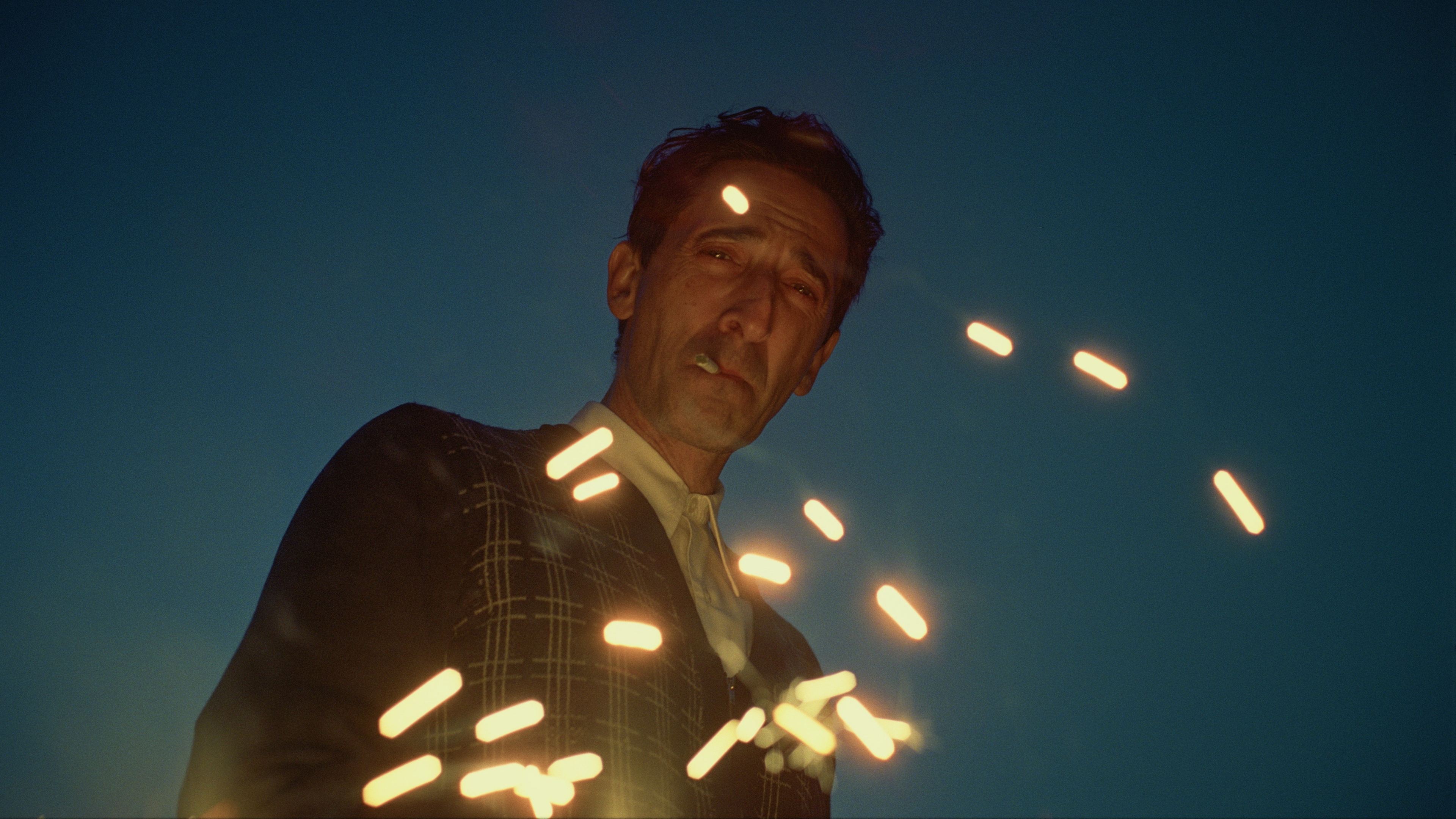
The Brutalist is a three-and-a-half-hour movie about a man building a building, and it’s one of the most overwhelming cinematic experiences of the last decade. Brady Corbet’s epic follows László Tóth, a fictional Hungarian-Jewish architect who survives the Holocaust and arrives in America with nothing but his talent and his trauma. If you’ve watched The Brutalist and walked out buzzing with questions about what it all means, you’re not alone. The film deliberately resists easy answers. But that’s exactly what makes it worth digging into.
Adrien Brody gives what might be the performance of his career here, and that’s saying something for the guy who won an Oscar for The Pianist. László isn’t a hero in any traditional movie sense. He’s brilliant and stubborn and broken, and the film never lets you forget any of those things simultaneously. The meaning of The Brutalist unfolds through his journey, through what America does to him and what he tries to build despite it.
The Ship and the First Lie
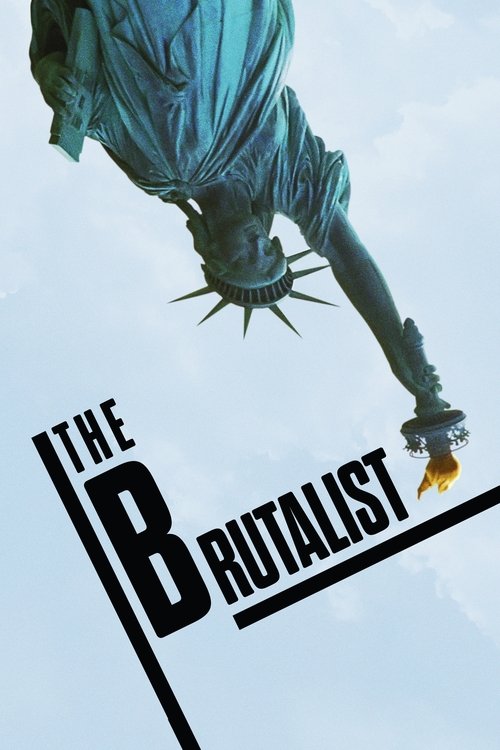
The film opens with László arriving in America, and Corbet shoots the Statue of Liberty upside down. That’s not subtle, and it’s not trying to be. From the first frame, Corbet is telling you that the promise of America is inverted for people like László. He’s a genius architect from the Bauhaus tradition, and his first job in the States is renovating his cousin’s furniture store. The gap between what László is and what America allows him to be is the engine of the entire film.
His cousin Attila, played by Alessandro Nivola, represents the immigrant who has already compromised. Attila changed his name, softened his accent, made himself palatable. He’s surviving, but at the cost of everything that made him who he was. László refuses to do this. He can’t. And the movie asks whether that refusal is integrity or self-destruction.
Harrison Lee Van Buren and the Faustian Bargain
Guy Pearce plays Van Buren, a wealthy industrialist who becomes László’s patron after seeing his renovation work. And this is where the movie gets really uncomfortable. Van Buren doesn’t just fund László’s vision. He owns it. He owns László.
Their relationship is the dark heart of the film. Van Buren genuinely appreciates László’s talent. He gives him the opportunity to design a massive community center, the project that becomes László’s life work. But Van Buren’s generosity comes with strings that tighten into a noose. There’s a scene where Van Buren casually humiliates László at a dinner party, displaying him like a prize acquisition. “Look at my architect,” the subtext screams. “Look what I bought.”
The Brutalist’s meaning becomes clearest in this dynamic. The immigrant doesn’t just need to be talented in America. He needs a patron. And the patron always extracts a price. Van Buren’s assault of László in the quarry is the most horrifying scene in the film, not just for its violence but for what it reveals about the transactional nature of their entire relationship. The artistic patronage was always, on some level, about possession.
Erzsébet and the Cost of Waiting
Felicity Jones plays László’s wife Erzsébet, who spends years in Europe waiting to join him. When she finally arrives, she’s using a wheelchair, her health destroyed by the years of separation and hardship. Their reunion isn’t the cathartic movie moment you’d expect. It’s awkward. They’ve become strangers who happen to love each other.
Erzsébet sees things László can’t, or won’t. She immediately clocks Van Buren for what he is. She understands the danger of the arrangement before László does, because she’s not blinded by the need to build. Her presence in the film grounds it emotionally. Without her, The Brutalist would risk being a purely intellectual exercise. With her, it becomes a movie about what ambition costs the people closest to you.
The Building Itself
The community center László designs is brutalist architecture in the literal sense. Raw concrete, geometric severity, unadorned honesty. Corbet uses the building as a metaphor that works on about five levels at once. It’s László’s attempt to create something permanent after surviving a world that tried to erase him. It’s his middle finger to the ornamental lies of the American establishment. It’s his offering to a community. And it’s the thing that nearly destroys him.
The building keeps getting delayed, redesigned, compromised. Van Buren wants changes. The committee wants changes. Everyone has an opinion about what László’s vision should look like, and every opinion chips away at it. If you’ve ever tried to make something honest in a system that rewards conformity, this will hit close to home.
The final reveal of the completed building is one of the great moments in recent cinema. Corbet holds the shot and lets you just absorb the structure. It’s beautiful and severe and deeply human, just like László himself. This is The Brutalist at its most potent: architecture as autobiography, concrete as confession.
That Ending at the Venice Biennale
The film jumps forward to the 1980s, where an elderly László is being honored at the Venice Biennale. His nephew gives a presentation about his work, and something feels wrong. The narrative we’re being told doesn’t match what we watched for the previous three hours. The nephew smooths over the ugliness, sanitizes the story, turns László’s suffering into an inspirational immigrant narrative.
This is Corbet’s sharpest move. After spending three-plus hours showing you the real, brutal cost of László’s American experience, he shows you how that story gets repackaged for comfortable consumption. The “American Dream” version of László’s life is a lie, and the film knows it. The audience knows it. But that’s the version that gets told at awards ceremonies and retrospectives.
It’s a gut punch because it implicates everyone. The people telling the story, the people listening to it, even us, watching a movie about an immigrant’s suffering as entertainment.
Where The Brutalist Lands
Look, this movie isn’t perfect. Three and a half hours is a lot, and there are stretches in the second act where the pacing tests your patience. Some of the supporting characters feel underdeveloped relative to the runtime. And the AI-assisted aspects of Brody’s Hungarian accent sparked a legitimate debate about authenticity in performance.
But those are quibbles against the scale of what Corbet achieved. He was 36 when he made this. The ambition is staggering, and unlike a lot of ambitious films, this one actually delivers on its promises. The Brutalist’s meaning isn’t just about one architect’s struggle. It’s about the fundamental lie at the center of the American promise: come here, be free, build what you want. As long as someone richer than you approves.
If you’re drawn to drama that doesn’t flinch from difficult questions about power, identity, and creative compromise, The Brutalist is essential viewing. It’s the kind of film that changes shape in your memory, that you’ll still be thinking about weeks later. And that upside-down Statue of Liberty? You won’t look at the real one the same way again.
Discover Your Next Favorite Film
Browse our curated collection of movie trailers and find something new to watch tonight.
Browse Trailers