Civil War Ending Explained: Alex Garland's Final Image
Films.io Editorial
5 min read
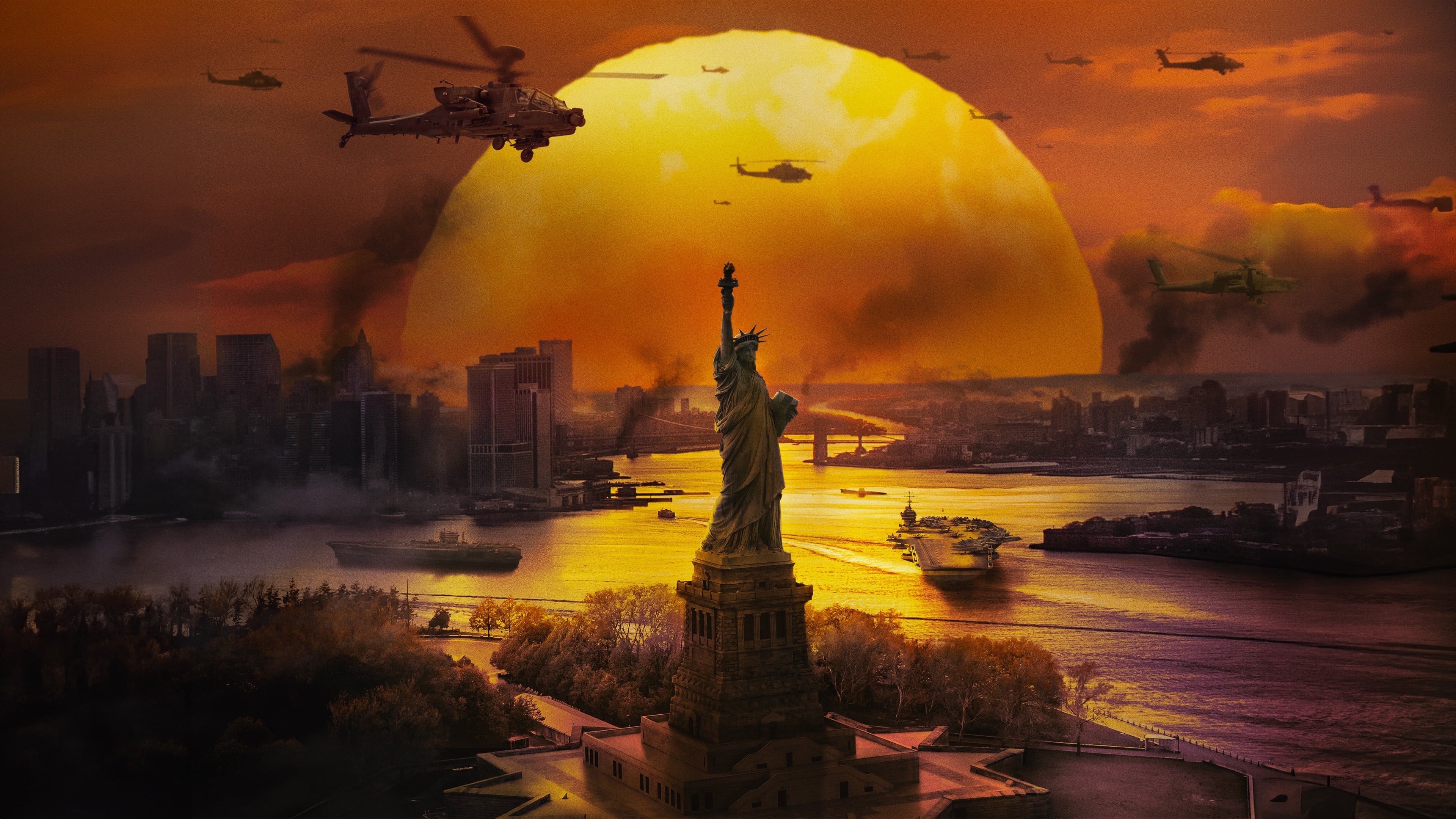
The last image in Civil War isn’t an explosion. It isn’t a flag being raised or a president giving a speech. It’s a photograph. Soldiers posing beside a body, grinning like they just won a pickup basketball game. And then the screen cuts to black. If you walked out of the theater confused, angry, or deeply unsettled, that was the point. The Civil War ending explained in its simplest terms: the camera doesn’t care who wins. It cares about what winning looks like.
Spoiler warning: this piece discusses the ending of Civil War in full detail.
Alex Garland’s 2024 film sparked arguments from the moment its trailer dropped, and those arguments only intensified once people actually saw the thing. Some viewers wanted a clear political allegiance. Others wanted catharsis, a definitive statement about American democracy. What they got instead was a war movie told through the eyes of journalists, ending not with resolution but with a snapshot. And that snapshot says everything the dialogue refuses to.
That Final Photograph
To understand the Civil War meaning, you have to sit with the film’s last few minutes. The Western Forces have stormed the White House. The President is cornered and killed. Jessie, the young photographer played by Cailee Spaeny, captures the moment. The soldiers pose. They smile. Click.
This isn’t a victory scene. It’s a trophy photo. And Garland frames it with the same flat, documentary-style composition he uses throughout the film. No swelling score, no slow motion, no hero lighting. Just flash, smile, done. The image echoes real photographs from Abu Ghraib, from conflicts across the Middle East, from every war where the victors stopped to document their dominance over the dead. Garland doesn’t need to editorialize. The visual reference does the work.
What makes this ending so disorienting is that it arrives without judgment. The film never tells you whether the Western Forces are right or wrong. It never gives you a rousing speech about democracy. It never even clarifies what specific policies or events caused the war. And that’s the move. Garland strips the politics out so you’re forced to look at the violence itself, unfiltered by the justifications we usually wrap around it.
Lee’s Death and What It Costs
The ending doesn’t land the way it does without the death of Lee, Kirsten Dunst’s war photographer. Lee spends the entire film maintaining professional distance. She’s seen everything, covered conflicts that hardened her into someone who can watch horror unfold and keep shooting. Dunst plays her as someone already hollowed out behind the eyes, and it’s one of the best performances of her career.
When the final assault on the White House begins, Lee breaks her own rule. She puts herself between danger and Jessie. It’s the one moment in the film where a journalist stops being an observer and becomes a participant. And Garland doesn’t let you sit with it. There’s no deathbed scene, no last words. Lee goes down. Jessie freezes, then keeps shooting.
That transfer of the camera, literal and figurative, is the real ending. Lee’s death completes Jessie’s transformation. At the start of the film, Jessie is shaking, overwhelmed, unable to process what she’s seeing. By the end, she’s the one taking the trophy photo. She doesn’t flinch. She doesn’t hesitate. The film asks: is this growth or corruption? And it refuses to answer.
The Road Trip That Brought Them Here
The journey from New York to Washington, D.C. is structured as a slow descent. Every stop along the way peels back another layer of normalcy. The sniper sequence is the film’s thesis statement compressed into a single scene. There are shooters who can barely articulate which side they’re fighting for. The reasoning boils down to: someone is trying to kill us, so we’re trying to kill them. No ideology. No cause. Just violence that has become its own reason for existing.
The most unsettling stop is the encounter with Jesse Plemons’s unnamed gunman. He stands over a pit of bodies, calmly interrogating people, asking “What kind of American are you?” This scene rattled audiences more than any battle sequence, and for good reason. It’s the moment where the film stops being speculative fiction and starts feeling like a memory. The whole setup carries the unmistakable DNA of real checkpoint encounters from ethnic conflicts around the world, the kind of casual sorting of human beings that war makes routine.
Joel, played by Wagner Moura, is our other lens into this world. He’s a seasoned journalist who still gets a rush from proximity to danger. Moura plays him with an unsettling mix of professionalism and adrenaline addiction, and his arc serves as a counterpoint to both Lee’s exhaustion and Jessie’s wide-eyed transformation. Sammy, played by Stephen McKinley Henderson, rounds out the group as the veteran reporter whose body can’t keep up with what the job demands. His presence is a quiet reminder that this work destroys people slowly, not just in the dramatic way Lee’s death illustrates.
Garland’s Deliberate Political Silence
The biggest criticism of Civil War is also its most intentional choice: the refusal to pick a side. Texas and California have formed an alliance. The President is on his third term and has used airstrikes against American citizens. But the film never explains the politics that led here. Critics called this cowardice. I think it’s the opposite.
Garland has said in interviews that he wanted to make a film about journalism and violence, not about red versus blue. The moment you assign specific real-world political identities to the factions, the audience picks a team. They root for their side. They justify the violence committed by the “good guys.” And the film’s entire argument collapses. By keeping the politics vague, Garland forces you to watch the violence without the comfort of knowing you’re on the right side.
This approach will feel familiar if you’ve followed Garland’s career. His earlier films, Ex Machina and Annihilation, both refused easy answers to their central questions. Ex Machina doesn’t tell you whether to root for the AI or pity the men she outsmarts. Annihilation doesn’t explain the Shimmer so much as let it swallow you. Garland trusts his audiences to sit with ambiguity, and Civil War is the most extreme version of that instinct. He took a premise that practically begs for partisan framing and turned it into something closer to a war correspondent’s diary, all observation, no editorializing.
Jessie’s Eyes in the Final Frame
Go back and look at Cailee Spaeny’s face in the last scene. Really look. She’s taking the most important photograph of the war, the dead president, the victorious soldiers, the end of a conflict that tore the country apart. And her expression isn’t triumph or horror. It’s concentration. Pure professional focus. She’s become Lee.
That’s the cruelest thing Garland does in this film. He shows you the full arc of a young person’s transformation, not into an ideology but into detachment. Jessie starts as someone who wants to document the truth. She ends as someone who can photograph a corpse and check the framing. The film doesn’t condemn her for it. It just shows you what it cost.
The meaning of Civil War’s ending comes down to that tension between documenting reality and being consumed by it. Lee died because she crossed the line from observer to participant. Jessie survives because she learned not to. And the final image, soldiers smiling beside a dead president, is both the truth and the problem with the truth. It happened. The camera recorded it. But without context, without the why, a photograph of victory and a photograph of atrocity look exactly the same.
Two years later, that final image still hasn’t stopped being uncomfortable. Garland made a film that gets under your skin not by telling you what to think, but by showing you something terrible and trusting you to feel the weight of it yourself. If you’re looking for more films that sit in that uncomfortable space between observation and participation, check out 28 Days Later, Garland’s screenplay that similarly drops ordinary people into a landscape of total collapse, or browse our war films for more.
Discover Your Next Favorite Film
Browse our curated collection of movie trailers and find something new to watch tonight.
Browse Trailers