Movies About Dreams and Nightmares
Films.io Editorial
5 min read
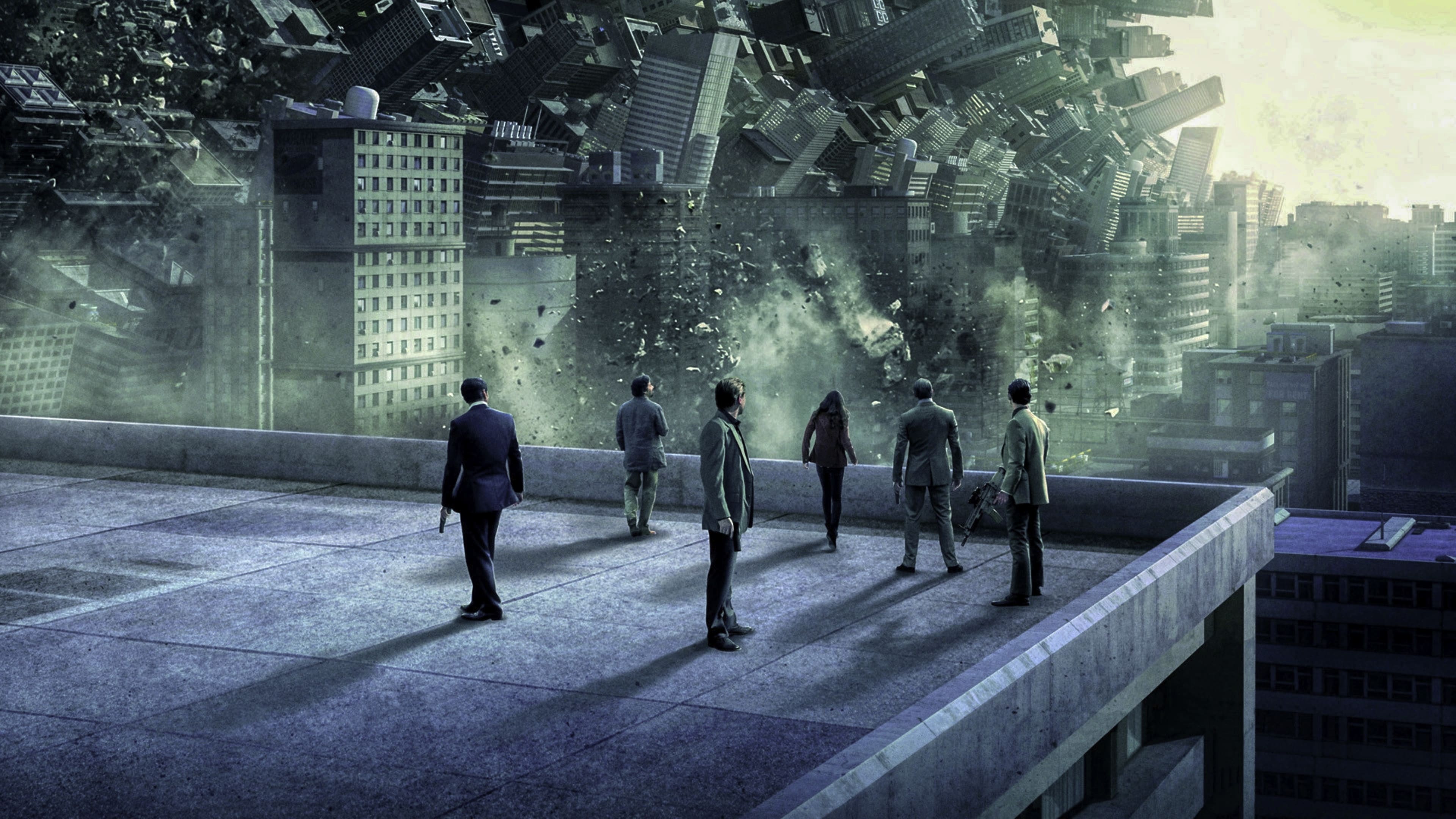
You know that feeling when you’re falling asleep and suddenly jolt awake because you tripped over nothing? Movies about dreams and nightmares chase that sensation for two hours straight. They warp familiar spaces, bend physics, and leave you second-guessing what’s real long after the credits roll. The best dream logic films don’t just show you strange images. They make you feel the disorientation in your chest, the way a nightmare does when you can’t quite place what’s wrong but everything is wrong. Inception set the modern standard for this kind of cinema, but it’s far from the only film that’s crawled inside the sleeping mind and refused to leave.
These films operate by their own internal rules. Time stretches or collapses. Dead people walk around like they never left. Hallways fold in on themselves. And the scariest part? It all makes perfect sense while you’re inside it. Here are some of the best movies about dreams and nightmares, each one doing something different with the slippery space between sleeping and waking.
The Heist That Rewired Your Brain
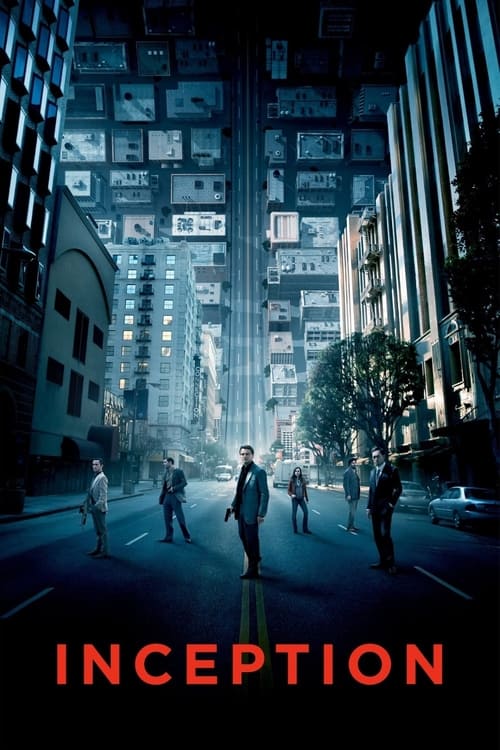
Inception (2010) is the obvious starting point, and for good reason. Christopher Nolan didn’t just make a movie about dreams. He built an architecture for them, literal architects who design dreamscapes for corporate espionage. The genius of the film is how methodical it is. Dreams within dreams within dreams, each with its own timeline ticking at a different speed. That hallway fight where Joseph Gordon-Levitt is bouncing off walls as gravity shifts? It’s one of the great action sequences of the century, and it only works because Nolan spent the first act teaching you exactly how his dream rules function. Leonardo DiCaprio carries the emotional weight, haunted by a projection of his dead wife that keeps sabotaging the mission. The spinning top at the end is still being argued about, and that’s by design. Nolan wants you stuck in that liminal space.
The Nightmare You Can’t Name
If Inception gives you a blueprint for dreaming, Donnie Darko (2001) drops you into a nightmare with no instructions. Jake Gyllenhaal plays a teenager visited by a figure in a monstrous bunny suit named Frank, who tells him the world will end in 28 days. The film drifts through suburban life with this constant undercurrent of dread. Is Donnie mentally ill? Is he unstable? Or is Frank real? Richard Kelly keeps the answer just out of reach, and the movie’s atmosphere does most of the heavy lifting. There’s a quality to the way scenes bleed into each other, especially the sleepwalking sequences, that feels genuinely dreamlike. Not surreal for surrealism’s sake, but dislocated in the way dreams actually are. You recognize everything, but the angles are all slightly off.

When Anxiety Becomes the Whole Movie
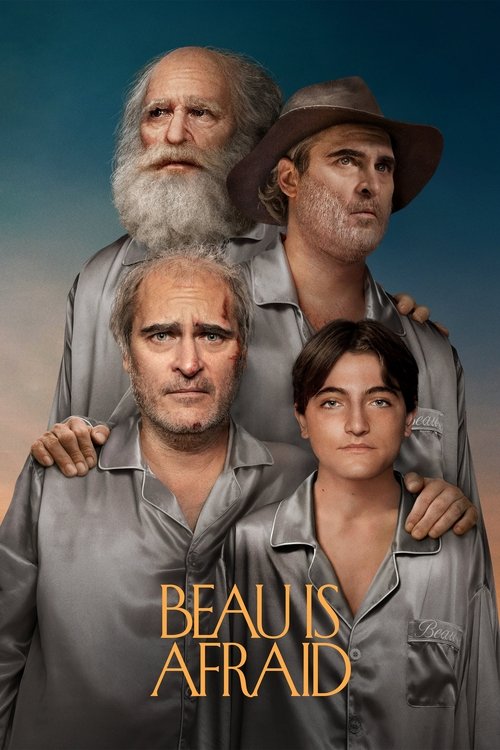
Beau Is Afraid (2023) is three hours of pure nightmare logic, and I mean that as both a compliment and a warning. Ari Aster takes Joaquin Phoenix’s crippling anxiety and builds an entire world out of it. The film unfolds like a bad dream that keeps escalating. Beau just wants to visit his mother, but every step of the journey spirals into something more absurd and terrifying. There’s a sequence set in a forest theater troupe that shifts into an animated fantasy, and another involving a suburban house that operates on its own sinister rules. It’s messy. It’s indulgent. Aster doesn’t always earn his runtime. But if you’ve ever had one of those dreams where you’re desperately trying to get somewhere and the world keeps throwing obstacles at you, each one more bizarre than the last, this movie nails that feeling like nothing else.
A World That Traded Sleep for Forever
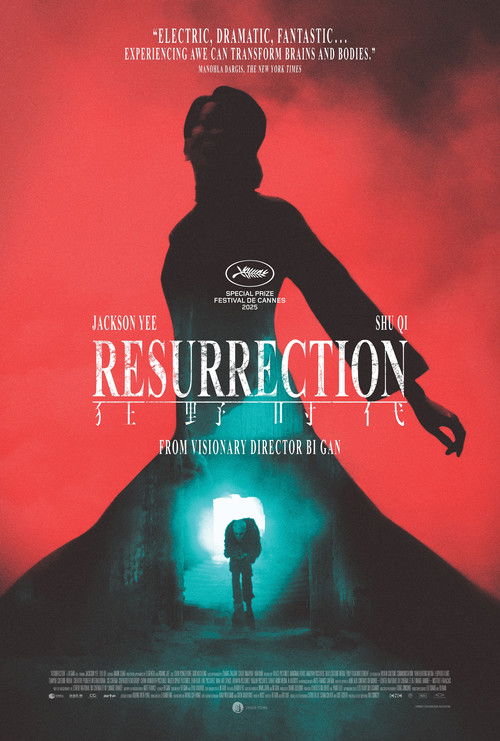
Resurrection (2025), directed by Bi Gan, takes a wildly original premise and runs with it. In its future world, humanity has given up the ability to dream in exchange for immortality. The main character, played by Jackson Yee, is an outcast who somehow still experiences visions, nightmares, and hallucinatory beauty that nobody around him can access. It’s a film about what we lose when we eliminate the unconscious mind entirely. Bi Gan, who made waves with Long Day’s Journey into Night and its extraordinary 3D dream sequence, brings a similar visual ambition here. The film moves at its own pace, nearly two hours and forty minutes, and it demands patience. But the imagery lingers. The nightmarish visions aren’t cheap scares. They feel like something your brain would actually produce at 3 AM, half-familiar and completely alien at the same time.
Bureaucracy as Fever Dream
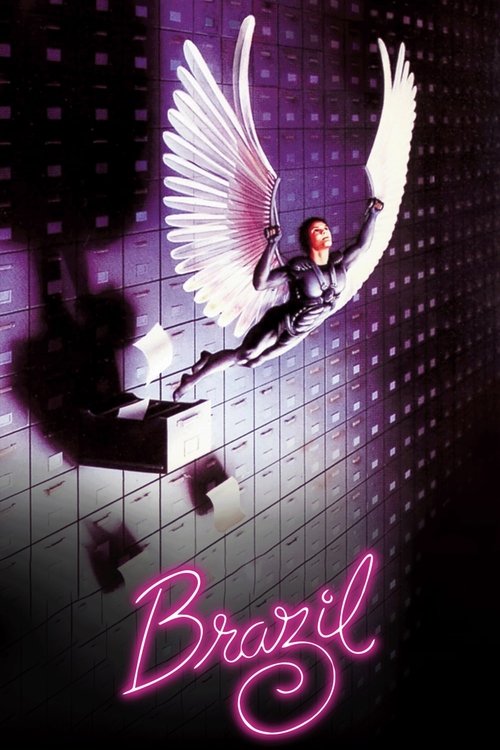
Terry Gilliam’s Brazil (1985) imagines a dystopian society filtered through the logic of a recurring daydream. Jonathan Pryce plays Sam Lowry, a low-level bureaucrat who escapes his suffocating existence by fantasizing about soaring through the sky as a winged hero rescuing a mysterious woman. The contrast between his mundane office life and these ecstatic dream sequences is the whole engine of the film. What makes Brazil so effective as a dream movie is how the two worlds start bleeding together. By the end, you genuinely can’t tell where reality stops and Sam’s fantasy begins. The film’s final minutes are devastating precisely because of that ambiguity. Gilliam created something that feels more relevant every year, a bureaucratic nightmare in the most literal sense.
When Memory Becomes the Dream
Christopher Nolan’s earlier film Memento (2000) isn’t literally about dreaming, but it operates on dream logic in a way that earns its place here. Guy Pearce plays a man who can’t form new memories, hunting for his wife’s killer using tattoos and Polaroids. The film runs in reverse chronological order, which means you experience the same disorientation the main character does. Every scene begins without context, just like waking up in the middle of a dream and trying to piece together where you are. The structural trick isn’t a gimmick. It’s the content. You’re living inside a mind that can’t hold onto reality, and the paranoia that creates feels exactly like a nightmare where you know something is wrong but can’t figure out what.
The Mathematician’s Spiral
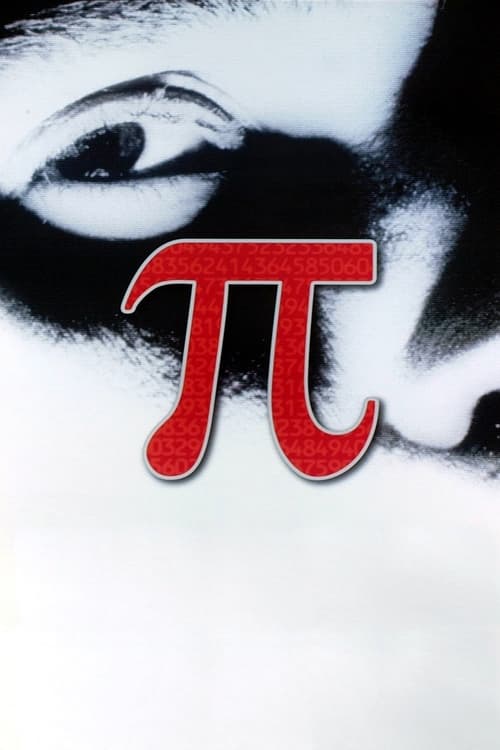
Darren Aronofsky’s debut Pi (1998) is a movie that feels like a migraine turning into a nightmare. Shot in grainy high-contrast black and white, it follows a mathematician named Max who becomes convinced he’s found a numerical pattern underlying all of reality. As his obsession deepens, the film’s visual style grows more frantic. Strobing lights, distorted faces, a pulsing electronic score that drills into your skull. The boundaries between Max’s calculations, his paranoid delusions, and something genuinely transcendent blur completely. Is he losing his mind, or is the universe actually revealing itself to him? Aronofsky never settles the question. The whole film plays like a fever dream you’re watching from behind your own eyelids, sweat-soaked and unable to look away.
The Stargate That Left Everyone Speechless
Stanley Kubrick’s 2001: A Space Odyssey (1968) may be a sci-fi film about space travel, but its final act is pure dream cinema. Dave Bowman enters the Stargate sequence and reality dissolves into cascading light, alien landscapes, and a room where he watches himself age in real time. Kubrick doesn’t explain it. He doesn’t need to. The sequence bypasses your intellect and hits something deeper, the same part of your brain that processes dreams. It’s been nearly sixty years, and that ending still defies easy interpretation. The whole film builds toward this moment where rational narrative gives way to something primal and imagistic, closer to dreaming than almost anything else in cinema history.
Time Loops and Waking Up Again
Not every dream movie has to be dark. Palm Springs (2020) uses its time loop premise to capture something very specific about dreaming: the repetition. Andy Samberg and Cristin Milioti wake up to the same day over and over, and the film finds both comedy and existential weight in that cycle. There’s a point where Samberg’s character has simply accepted the loop, drifting through each repeated day like someone half-asleep. The film is funny and sharp, but underneath the jokes there’s a real question about what it means to be conscious when nothing changes. It’s lighter fare than most movies about dreams, but it earns its spot.
When Time Itself Feels Like a Dream
Terry Gilliam shows up twice on this list for a reason. Twelve Monkeys (1995) is built around a recurring dream that turns out to be a memory, or a prophecy, or both. Bruce Willis plays a convict sent back in time from a devastated future to trace the origins of a plague. The catch is that the time travel scrambles his sense of reality so badly that he can’t tell if he’s actually moving through time or simply losing his mind. Brad Pitt’s unhinged performance as a mental patient only deepens the confusion. The film keeps circling back to the same image, a scene in an airport, a woman’s face, a gunshot, and each time the context shifts. It’s the cinematic equivalent of a recurring dream that changes a little every time you have it, growing clearer and more frightening as the pieces click into place.
Dream movies work because cinema itself is a kind of dreaming. You sit in a dark room, surrender control, and let images wash over you. The best films on this list understand that connection and exploit it. Whether it’s the layered architecture of Inception, the anxiety spirals of Beau Is Afraid, the bureaucratic fever visions of Brazil, or the recurring prophecy of Twelve Monkeys, these are movies that don’t just depict dreams. They make you feel like you’re having one. Browse more sci-fi films and mystery films in our collection if you’re looking for more reality-bending cinema.
Discover Your Next Favorite Film
Browse our curated collection of movie trailers and find something new to watch tonight.
Browse Trailers