Looking Back at Taxi Driver at 50: Scorsese's Defining Statement
Films.io Editorial
5 min read
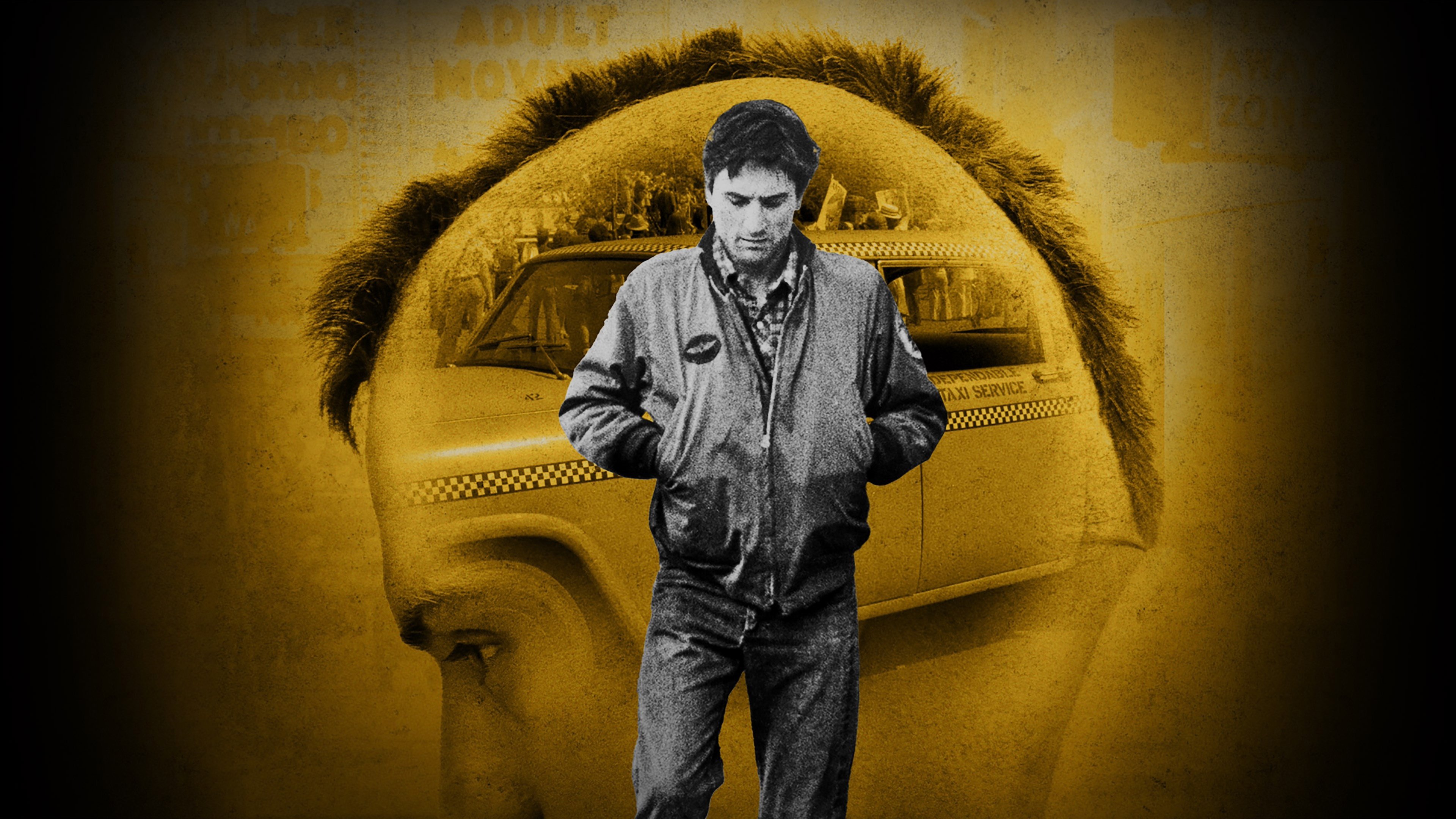
Earlier this year, Taxi Driver quietly crossed a line that felt impossible: fifty years since its February 1976 release. That anniversary came and went without the fanfare you’d expect for a film this important, which feels oddly appropriate. Travis Bickle was never the type to throw a party. But now, a few months past that milestone, it’s worth sitting with what Scorsese, Schrader, and De Niro actually accomplished, and why their film about a lonely cabbie in a rotting city still won’t leave us alone.
The Taxi Driver 50th anniversary isn’t just a milestone for one movie. It marks a half-century since American cinema got one of its most uncomfortably alive creations, a film that still makes people squirm in their seats and argue about its ending over drinks.
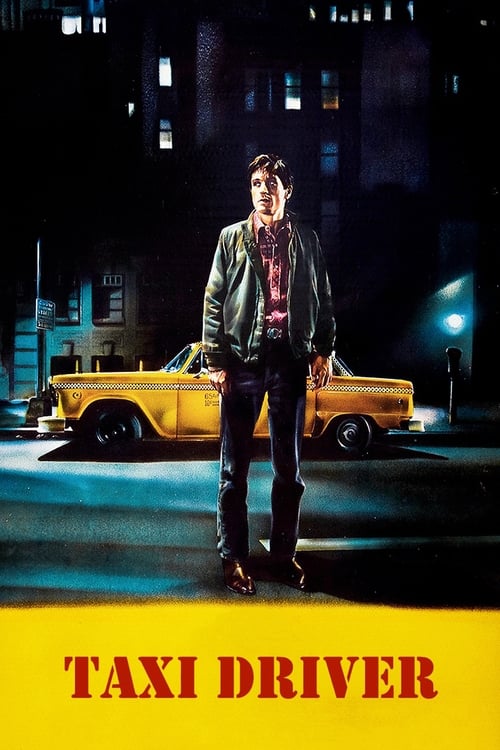
Travis Bickle drives his cab through a New York City that smells like it’s coming through the screen. The rain never cleans anything. The neon just makes the grime glow. And Travis, fresh back from Vietnam with a brain that won’t stop buzzing, watches it all through a windshield that might as well be a sniper scope. Taxi Driver in 1976 wasn’t just a movie. It was a dare.
“You Talkin’ to Me?” Didn’t Start as Iconic
Here’s something people forget: De Niro improvised that mirror scene. Schrader’s script just said “Travis talks to himself in the mirror.” What De Niro did with it, that coiled, half-joking rehearsal for murder, became the single most quoted line in American film history. But the power of the scene isn’t the quotability. It’s the sadness underneath. Travis is practicing human interaction the way a kid practices asking someone to prom. He doesn’t know how to be a person anymore, so he’s trying on different versions of confrontation like outfits. The smile that flickers across his face is the most disturbing part. He’s having fun.
De Niro lost 35 pounds for the role. He actually drove a cab in New York for weeks to prepare. When you watch the film now, you can feel that preparation in every frame. Travis doesn’t move like an actor playing a disturbed loner. He moves like a guy who genuinely doesn’t know what to do with his body when other people are around.
Bernard Herrmann’s Last Score
Bernard Herrmann, who scored Hitchcock’s greatest films, wrote the music for Taxi Driver and died the night he finished recording it. The score is one of the most unusual pieces of film music ever composed. It swings between two completely different registers: a sleazy, jazzy saxophone that sounds like a late-night lounge act, and these low, creeping, almost religious string passages that feel like something terrible is about to happen. The genius is that Herrmann plays them against each other, sometimes in the same scene. Travis’s cab rides through Times Square get both the seduction and the dread simultaneously. The city is exciting and it’s dying. The music tells you both things at once.
This was the last great work from a composer who’d already defined film music through Vertigo and Psycho. That Herrmann spent his final creative energy on Taxi Driver feels right. The film is obsessed with endings, with things winding down and running out.
Schrader Wrote What He Knew
Paul Schrader has been open about the fact that he wrote the script during one of the darkest periods of his life. He was living in his car, barely eating, drinking too much, and he hadn’t talked to another person in weeks. The screenplay poured out of him. Travis’s diary entries, which provide the film’s voiceover narration, have that flat, slightly confused quality of someone who’s lost the ability to judge their own thoughts. “Loneliness has followed me my whole life. Everywhere. In bars, in cars, sidewalks, stores, everywhere.” That’s not movie dialogue. That’s someone trying to explain something they don’t understand about themselves.
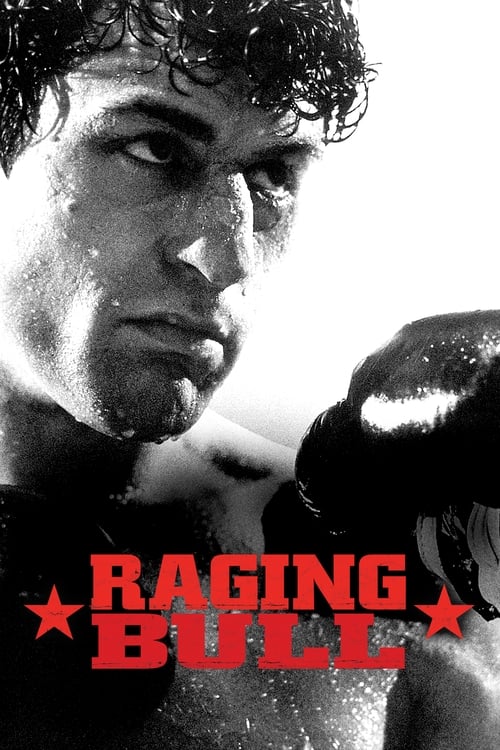
Schrader would go on to write Raging Bull for Scorsese and De Niro four years later, another story about a man who can only express himself through violence. But Taxi Driver is the rawer film. Jake LaMotta at least has a context for his rage, a boxing ring, a career. Travis has nothing. He’s just a guy in a cab.
Jodie Foster Was Twelve
The most uncomfortable element of Taxi Driver, and the one that generates the most debate fifty years later, is Jodie Foster’s performance as Iris, the child prostitute Travis decides to “save.” Foster was twelve years old during filming. The scenes between her and De Niro, particularly the diner scene where Travis tries to convince her to go home, are almost unwatchable in their awkwardness. Not because they’re poorly made, but because the discomfort is the point. Travis fixates on Iris the way he fixates on everything, with an intensity that has nothing to do with the other person and everything to do with his own need for a mission.
Scorsese handled this material carefully. Foster’s older sister served as her stand-in for certain scenes. A welfare worker was on set throughout. But the film doesn’t soften what it’s showing you. Iris isn’t saved in any real sense. The bloodbath at the end just transfers her from one kind of hell to another, and the newspapers call Travis a hero for it. That irony was sharp in 1976. It’s sharper now.
The Blood-Soaked Ending Scorsese Had to Desaturate
The climactic shootout in the brothel was so violent that the MPAA threatened the film with an X rating. Scorsese’s solution was to desaturate the color in post-production, draining the reds so the blood looked almost brown. The result is actually more disturbing than full-color gore would have been. The muted palette makes the whole sequence feel like a fever dream, like Travis has already crossed over into some other reality where the normal rules of color and physics don’t apply. When the camera slowly pulls up and away from the carnage in that famous overhead shot, it feels like the film itself is trying to escape what it just showed you.
And then Travis survives. He becomes a hero. He gets a letter from Iris’s grateful parents. He goes back to driving his cab. Scorsese and Schrader have talked about whether the ending is a dying fantasy or reality, and they’ve given contradictory answers over the years. The ambiguity is the point. The system that created Travis Bickle doesn’t punish him. It rewards him. He’s still out there, driving.
Scorsese Before and After
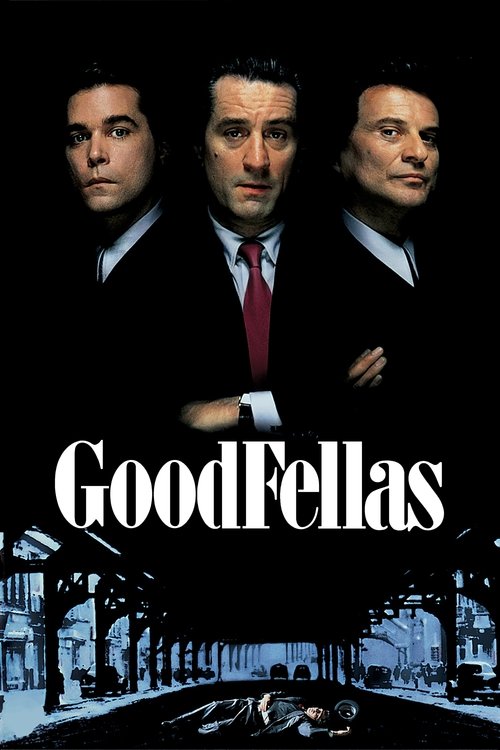
It’s hard to overstate how much Taxi Driver defined what Scorsese would become. He’d already made Mean Streets and Alice Doesn’t Live Here Anymore, both strong films that showed real talent. But Taxi Driver was the one that crystallized his obsessions: Catholic guilt, male violence as a form of broken communication, the camera as a voyeuristic instrument that implicates the audience. Everything he did after, from Goodfellas to The Wolf of Wall Street, carries Taxi Driver’s DNA.
You can trace a direct line from Travis Bickle to Henry Hill to Jordan Belfort. All three are narrators who think they’re the heroes of their own stories. All three are deeply unreliable. And all three seduce the audience into rooting for them before pulling the rug. Scorsese learned that trick here, in that yellow cab, with De Niro’s hollow eyes staring into the rearview mirror.
The film also launched a particular strain of American cinema that’s still very much alive. Every isolated, alienated protagonist who talks to themselves and imagines violence as a solution owes something to Travis Bickle. You can feel the influence in films like Fight Club, Nightcrawler, and Joker, which literally lifted the Scorsese visual palette and De Niro himself for its own spin on the urban loner story.
What Hasn’t Aged Well
Look, the film isn’t perfect, and fifty years of distance makes certain things clearer. The treatment of Black characters is a problem. Travis’s racism is part of the character, and the film knows it’s ugly, but Scorsese doesn’t always give the Black characters enough interiority to push back against Travis’s gaze. The scene where Travis fixates on a Black man in the campaign office, his hand twitching, is powerful because it exposes Travis’s sickness. But other moments feel less intentional and more like the blind spots of a 1970s production.
The pacing also sags in the middle section. There’s a long stretch where Travis’s daily routine repeats itself without enough variation, and while that repetition is thematically intentional, the restlessness it’s meant to create in the audience sometimes tips over into actual boredom. Scorsese was still learning how to control a feature’s rhythm, and it shows.
Still Driving After All This Time
Fifty years is a long time for any film to stay relevant. Most don’t. They become artifacts, interesting for historical reasons but emotionally dead. Taxi Driver hasn’t gone dead. If anything, its portrait of a lonely man radicalized by his own isolation feels more recognizable now than it did in 1976. The mechanics have changed. Travis didn’t have the internet, social media feeds, or algorithm-driven rabbit holes. But the psychological pattern Schrader and Scorsese identified, the drift from loneliness to grievance to grandiosity to violence, is the exact pattern we’ve watched play out over and over in the decades since.
That’s the uncomfortable thing about celebrating this anniversary. Taxi Driver is a great film. It’s also a diagnosis that turned out to be prophetic. Travis Bickle is still out there, driving his cab through streets that won’t get clean. And we’re still watching him through the windshield, unsure if we should be horrified or fascinated. Probably both. Browse more drama and crime films in our collection, and see if any of them hit you the way this one still does.
Discover Your Next Favorite Film
Browse our curated collection of movie trailers and find something new to watch tonight.
Browse Trailers