4 Movies That Influenced The Substance (The Body-Horror Lineage)
Films.io Editorial
5 min read

Coralie Fargeat’s The Substance hit audiences like a slap in 2024. Demi Moore peeling her own skin back, Margaret Qualley crawling out of a spinal slit, and a third-act creature that makes Brundlefly look like a swimsuit model. The movie didn’t invent body horror, though. It drew from a deep well of films that treat the human body as something unstable, something that can betray you. Understanding the movies that influenced The Substance means tracing a body-horror lineage that stretches back decades, through Cronenberg’s operating theaters, Zulawski’s apartment breakdowns, and Japanese genre cinema that most Western audiences still haven’t caught up with.
Fargeat has been open about her reference points in interviews. Some are obvious. Others are less expected. What connects them all is a shared obsession: the body as a site of transformation, decay, desire, and disgust. These aren’t just gross-out movies. They’re films that use physical mutation to say something about identity, aging, beauty standards, and the violence we inflict on ourselves in pursuit of perfection.
Here are the films from the body-horror lineage that fed directly into what Fargeat built with The Substance.
The Cronenberg Foundation
You can’t talk about The Substance without talking about David Cronenberg. His fingerprints are everywhere, from the clinical tone of the injection scenes to the way flesh splits open with an almost surgical precision.
The Fly (1986) is the most obvious touchstone. Seth Brundle’s gradual transformation into Brundlefly mirrors Elisabeth Sparkle’s deterioration across The Substance. Both films use a metamorphosis to explore something painfully human. Brundle loses himself piece by piece: his teeth, his skin, his ability to eat solid food. It’s a love story wrapped in body horror, and Fargeat borrowed that emotional architecture wholesale. The Substance asks the same question The Fly does: at what point do you stop being yourself?

Cronenberg’s Videodrome (1983) goes even further into the territory Fargeat stakes out. Max Renn’s body becomes a portal, a VHS slot opening in his stomach, his hand fusing with a gun. Cronenberg treats the body as technology, something that can be hacked and reprogrammed. The Substance’s central conceit, a serum that creates a younger duplicate from your own cells, is pure Videodrome logic. The body isn’t sacred. It’s a medium.
Dead Ringers (1988) is the subtler influence. Twin gynecologists sharing patients, sharing identities, eventually sharing a psychological collapse. The doubling in The Substance, Elisabeth and Sue as two halves of the same person, echoes the Mantle twins’ inability to exist independently. Cronenberg shoots their unraveling with cold precision, and Fargeat uses a similar visual language when Elisabeth starts coming apart.
The Subway Scene and Its Aftermath
Possession (1981), directed by Andrzej Zulawski, is the movie that might connect most viscerally to The Substance’s emotional register. Isabelle Adjani’s subway scene is one of the most physically committed performances ever captured on film. She thrashes, contorts, and expels something from her body that looks like a miscarriage filmed as an exorcism. Zulawski wasn’t interested in restraint. He wanted the audience to feel the rupture.
Fargeat clearly studied this. The Substance matches Possession’s intensity beat for beat in its final act, when Elisabeth’s body rebels completely against the serum’s logic. Both films treat female bodies as battlegrounds where internal conflict manifests as literal, bloody transformation. The creature that Adjani births in Possession is a grotesque double, a replacement lover made of flesh and need. Sound familiar?
Japanese Body Horror and the Extreme
Fargeat has cited Takashi Miike as an influence, and Gozu (2003) specifically. This one’s weirder than the Cronenberg films by a wide margin. A yakuza thriller that spirals into surrealist body horror, Gozu features a climax where a fully grown man is birthed from a woman’s body. It’s played with deadpan absurdity, but the imagery is unforgettable. The Substance borrows that willingness to push physical transformation past the point of comfort, past the point of logic, into something that’s simultaneously horrifying and darkly funny.
The Japanese extreme cinema of the late ’90s and early 2000s gave filmmakers permission to treat the body as infinitely malleable. Audition (1999), also by Miike, builds slowly toward its notorious final act. Asami’s acupuncture needles and piano wire feel almost gentle compared to what The Substance puts Elisabeth through, but both films share a structural trick: they lull you with something familiar before pulling the floor out.

Tetsuo: The Iron Man (1989), Shinya Tsukamoto’s frantic cyberpunk film, turns the body into literal hardware. Metal erupts from skin. A man’s penis becomes a power drill. It’s shot in grainy black and white with a pace that feels like an anxiety attack. The Substance doesn’t go cyberpunk, but it borrows Tetsuo’s manic energy in its third act, when the transformations accelerate beyond anyone’s control.
Aging, Beauty, and the Mirror
Death Becomes Her (1992) is the reference that most people miss, probably because Robert Zemeckis made it as a comedy. Meryl Streep and Goldie Hawn drink immortality potions and watch their bodies fall apart in increasingly grotesque ways. Streep’s neck twisting 180 degrees. Hawn with a shotgun hole through her stomach. The vanity of it all, the desperate clinging to youth, maps directly onto The Substance’s satirical edge. Fargeat just removed the laugh track.
Eyes Without a Face (1960), Georges Franju’s French horror classic, is another crucial ancestor. A surgeon kidnaps young women to graft their faces onto his disfigured daughter. The film treats beauty as something that can be stolen, harvested, transplanted. It’s clinical and poetic at the same time. The Substance updates this idea for the cosmetic surgery era, but the underlying horror is unchanged: someone else’s beauty always comes at a cost.
The Picture of Dorian Gray (1945), the Albert Lewin adaptation, isn’t body horror in the traditional sense, but its central idea is the same one The Substance runs with: what if you could offload the cost of aging onto something else? Dorian stays beautiful while his portrait rots. Elisabeth stays functional while Sue absorbs her youth. The transaction is identical. Only the medium changes.
The Self Devouring Itself
Society (1989), Brian Yuzna’s satire about Beverly Hills elites who literally consume the lower classes through a process called “shunting,” is one of the most underrated body-horror films ever made. The final sequence, where wealthy socialites merge into a writhing mass of flesh, is revolting and pointed. Fargeat shares Yuzna’s interest in using body horror as social commentary, though The Substance focuses its critique more narrowly on the entertainment industry’s consumption of women’s bodies.
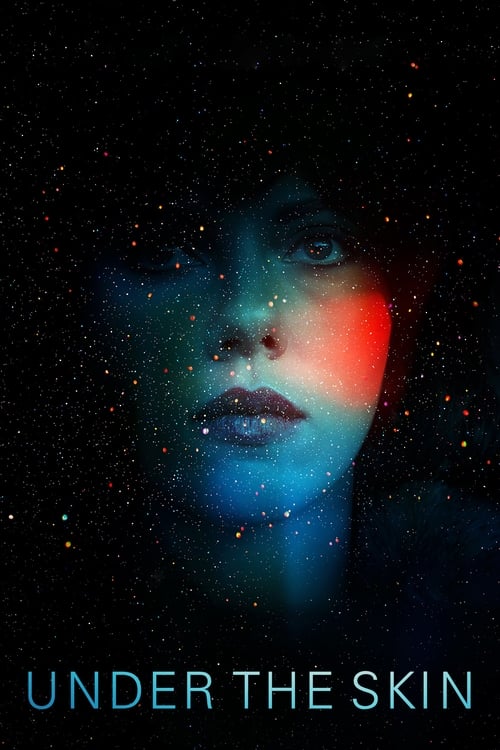
Under the Skin (2014), Jonathan Glazer’s film with Scarlett Johansson, approaches body horror from the opposite direction. Instead of a body falling apart, we watch an alien wearing human skin try to understand what it means to have a body at all. The men she lures into black pools dissolve from the inside, their skin floating empty on the surface. Glazer’s influence on The Substance is tonal as much as visual. Both films are interested in the strangeness of inhabiting flesh, the disconnect between surface and self.
Desire Made Destructive
A couple more close relatives orbit this lineage and deserve mention. Trouble Every Day (2001), Claire Denis’s horror film about desire that manifests as literal consumption, remains one of the most disturbing films in this tradition. Béatrice Dalle plays a woman whose sexual hunger drives her to devour her partners. Denis shoots the violence with the same sensual attention she brings to her non-genre films, and the result is body horror that feels genuinely dangerous.
The Substance shares this refusal to separate desire from destruction. Elisabeth wants to be desired. Sue is desire made flesh. And both of them are being eaten alive by the arrangement.
What Fargeat did with The Substance wasn’t reinvention. It was synthesis. She took Cronenberg’s clinical precision, Zulawski’s emotional extremity, Miike’s willingness to go too far, and the beauty-as-horror tradition that runs from Eyes Without a Face through Death Becomes Her, and she fused them into something that felt genuinely new. The body-horror lineage is long and bloody, and The Substance earned its place in it. If you’re hungry for more films that treat the human body as the scariest thing on screen, browse our horror collection for plenty more where these came from.
Discover Your Next Favorite Film
Browse our curated collection of movie trailers and find something new to watch tonight.
Browse Trailers