20 Movies with the Best Soundtracks
Films.io Editorial
5 min read

Some movies you watch. Others you hear first. The best movie soundtracks don’t just sit underneath the action, they reshape the entire experience, burrowing into your memory so that years later, a single track drops you right back into the story. This list spans four decades of films where the music isn’t decoration. It’s the reason you remember them.
Needle Drops That Changed the Game
These directors didn’t compose anything. They just had impeccable taste, and the guts to let a pre-existing song completely redefine a scene.
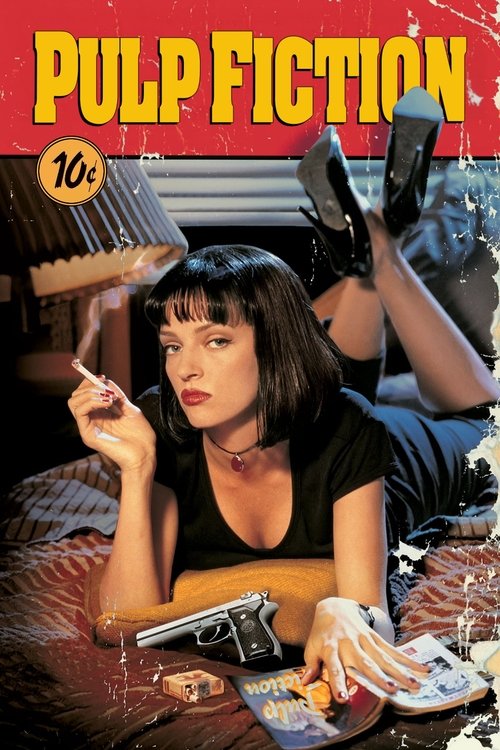
1. Pulp Fiction (1994) - Quentin Tarantino
Tarantino built an entire filmmaking philosophy around the needle drop, and Pulp Fiction is where it all clicked. “Misirlou” by Dick Dale rips through the opening credits and immediately tells you this movie operates on a different frequency. The Chuck Berry twist contest, Dusty Springfield’s “Son of a Preacher Man” as Mia Wallace descends the stairs, Urge Overkill covering Neil Diamond. Every song choice feels like Tarantino raided the coolest jukebox on the planet and built a movie around what came out.
2. Goodfellas (1990) - Martin Scorsese
Scorsese uses pop music the way other directors use dialogue. The jump from Bobby Vinton’s “Roses Are Red” to Sid Vicious snarling through “My Way” tracks the entire arc of Henry Hill’s life, from wide-eyed kid to paranoid wreck, without a single line of exposition. The Copacabana tracking shot set to “Then He Kissed Me” by The Crystals is probably the most famous music-and-camera marriage in American cinema. Every song is period-accurate, emotionally precise, and chosen by a guy who clearly spent his whole life listening to this stuff.
3. Django Unchained (2012) - Quentin Tarantino
Tarantino’s second entry here earns it by doing something nobody else would try: dropping Rick Ross and James Brown into a pre-Civil War revenge western and making it feel completely natural. The use of Jim Croce’s “I Got a Name” during Django’s first ride as a free man is quietly devastating. Ennio Morricone contributes original material alongside his own recycled spaghetti western cues, and the collision between hip-hop, soul, and Morricone’s orchestral work creates a soundtrack that sounds like nothing else in film history.
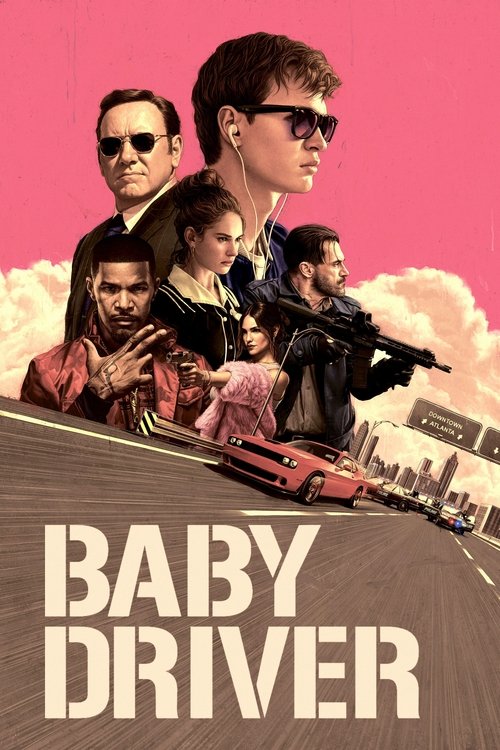
4. Baby Driver (2017) - Edgar Wright
Edgar Wright synced an entire movie to its playlist, down to the gunshots. “Bellbottoms” by The Jon Spencer Blues Explosion opens with a car chase choreographed to every drum hit. “Hocus Pocus” by Focus turns a foot chase into something absurdly joyful. The trick isn’t just that the songs are good. It’s that Wright edited the film to the music rather than the other way around. Baby’s tinnitus gives the conceit an in-story justification, but really, this is a director who wanted to make a movie that felt like driving with the perfect playlist on.
5. Drive (2011) - Nicolas Winding Refn
Kavinsky’s “Nightcall” over the opening credits single-handedly launched a synthwave revival. The rest of the soundtrack, heavy on Cliff Martinez and College featuring Electric Youth, creates this dreamy, neon-soaked atmosphere that makes a violent crime film feel like a love letter written at 2 AM. The music is doing most of the emotional heavy lifting in a film where Ryan Gosling barely speaks. “A Real Hero” playing during the final act hits harder than any line of dialogue could. Refn understood that sometimes the coolest thing a movie can do is let the music say everything the characters won’t.
Original Scores That Rewired Your Brain
These composers didn’t just write music for movies. They invented entirely new sonic languages that redefined what a film score could be.
6. The Social Network (2010) - David Fincher
Trent Reznor and Atticus Ross scored a movie about building a website and made it sound like the loneliest thing in the world. “Hand Covers Bruise,” the opening piano piece, is so spare and cold it could score a horror film. The electronic pulse underneath the rowing sequence at Henley turns a sports montage into something almost alien. This score won the Oscar and basically invented a new genre of film music: ambient electronic scores for prestige dramas. Before this, nobody was hiring Nine Inch Nails guys to score Aaron Sorkin scripts.
7. Interstellar (2014) - Christopher Nolan
Hans Zimmer wrote the score based on a one-page letter from Nolan about a father’s relationship with his child, before he even knew the film was about space travel. That origin story explains everything. The organ at the center of the score, recorded in a 14th-century London church, gives the whole thing a feeling of cosmic hymn. “No Time for Caution” during the docking sequence is probably the most intense piece of film music in the last twenty years. Zimmer used the pipe organ’s sheer physical power, the way it vibrates your chest, to make space feel vast and terrifying and sacred all at once.
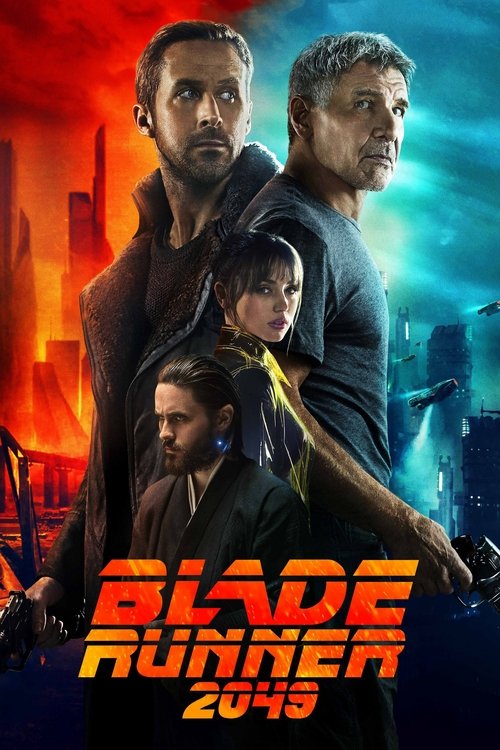
8. Blade Runner 2049 (2017) - Denis Villeneuve
Hans Zimmer and Benjamin Wallfisch had to follow up Vangelis, which is like being asked to repaint the Sistine Chapel ceiling. They pulled it off by going brutalist. The score is all massive, grinding bass tones and digital howls that feel less like music and more like the sound of a dying world breathing. The “Sea Wall” sequence is basically a sustained sonic assault that perfectly mirrors K’s internal collapse. Where Vangelis made the original Blade Runner sound romantic and melancholy, this score sounds like concrete and rain and exhaustion.
9. Inception (2010) - Christopher Nolan
That BRAAAM. Zimmer’s score for Inception did something rare: it created a sound so distinctive that it became an entire era’s shorthand for “epic.” But beyond the famous brass blasts, the score is built on a clever structural trick. Edith Piaf’s “Non, je ne regrette rien” slowed down at various dream-level speeds generates the actual musical DNA of the score. The deeper into the dream, the more stretched and distorted the familiar melody becomes. It’s a score that’s literally about the architecture of time, which is exactly what the film is about.
10. Dune (2021) - Denis Villeneuve
Zimmer threw out every orchestral convention for this one. He invented new instruments, recorded female vocalists performing in a fictional language, and used modified guitars processed through effects chains until they sounded extraterrestrial. The result is a score that doesn’t reference any Earth-based musical tradition. “Ripples in the Sand” and the Sardaukar throat-singing chant are so physically overwhelming in a theater that they function almost as world-building on their own. You don’t just watch Arrakis. You hear what it feels like to stand on sand that wants to swallow you.
11. Oppenheimer (2023) - Christopher Nolan
Ludwig Goransson’s score makes you feel like you’re standing too close to something dangerous. The violin writing is relentless, almost frantic, building a sense of acceleration that mirrors the race toward Trinity. But the real genius is the silence. When the bomb detonates and the sound drops out completely, the preceding forty minutes of escalating musical tension makes that silence physically uncomfortable. Goransson also weaves in a fragile, almost tender piano motif for the personal cost of the project that keeps surfacing underneath all the urgency.
Music as Character
In these films, music isn’t scoring the story. It IS the story. Remove the soundtrack and you lose the movie entirely.
12. Whiplash (2014) - Damien Chazelle
The jazz in Whiplash isn’t background music, it’s the battlefield. Chazelle shoots drum practice like a boxing match, and the sound design puts you close enough to feel the cymbals ringing in your teeth. “Caravan” by Duke Ellington becomes a war of wills between J.K. Simmons and Miles Teller, and the final nine-minute performance is cut like an action sequence. The film understands something specific about musicianship: the gap between technical perfection and the thing that makes someone actually great, and it uses every frame and beat to live inside that gap.
13. La La Land (2016) - Damien Chazelle
Justin Hurwitz’s score is deceptively simple. “City of Stars” sounds like something you’ve always known, which is the point. The opening freeway number is a statement of intent: this is a musical and it will not apologize for it. But where La La Land earns its spot is in the “Epilogue,” that devastating final montage where the main theme returns in full orchestral arrangement to score the life Seb and Mia didn’t get to live together. Hurwitz takes a melody you’ve been humming for two hours and makes it break your heart.
14. Amadeus (1984) - Milos Forman
The obvious advantage is that the music is Mozart, which is cheating in the best possible way. But Forman’s genius is in how he deploys it. The Requiem sequence, with a dying Mozart dictating to a jealous Salieri, turns composition into physical labor and spiritual torment. You watch music being born, note by note, and the film makes you feel the gap between hearing perfection and knowing you could never create it. “The Marriage of Figaro” finale playing over Salieri’s recognition of Mozart’s genius is one of cinema’s great uses of existing classical music.
15. Inside Llewyn Davis (2013) - Ethan Coen
The Coens built a film around a folk singer who’s talented enough to be great but unlucky enough to stay invisible, and every musical performance reinforces that tragedy. Oscar Isaac actually sings and plays live on camera, and “Hang Me, Oh Hang Me” in the opening scene tells you the entire movie in three minutes if you’re paying attention. T Bone Burnett’s music supervision finds the sweet spot between period authenticity and genuine emotion. The final Gaslight Cafe performance, which loops back to the beginning, makes the music feel like a trap Llewyn can never escape.
Mood Architects
These soundtracks create an atmosphere so specific that the music becomes inseparable from the world of the film. You hear three seconds and you’re back inside it.
16. Her (2013) - Spike Jonze
Arcade Fire’s William Butler and Owen Pallett scored a film about falling in love with an AI, and their music sounds exactly like that feels: warm, slightly synthetic, beautiful in a way that makes you a little suspicious. The score uses ukulele and soft electronics to create something intimate but uncanny, like a lullaby playing in a room with no corners. Karen O’s “The Moon Song” is so tender and small that it makes a relationship between a human and an operating system feel more real than most on-screen romances.
17. The Grand Budapest Hotel (2014) - Wes Anderson
Alexandre Desplat’s score is a clockwork music box in the best sense. The balalaika-driven main theme sounds like it was composed inside the hotel itself, all precision and Old World charm with something melancholy underneath. Desplat matches Anderson’s visual symmetry with musical symmetry: recurring motifs that click into place like the set design. The score won the Oscar, and it deserved it, because it does the hardest thing a comedy score can do. It’s funny and sad at the same time without ever winking at the audience.
18. Moonlight (2016) - Barry Jenkins
Nicholas Britell’s score chops and screws classical music, literally. He recorded orchestral pieces and then applied the slowed-down, pitched-down techniques from Houston hip-hop to create something that sounds both elegant and street-level. “Little’s Theme” is a string piece that feels like it’s underwater, perfectly matching a story about a kid drowning in silence. The use of Goodie Mob’s “Cell Therapy” and Boris Gardiner’s “Every Nigger Is a Star” as bookends gives the film a musical identity that’s rooted in Black culture while the score itself invents something entirely new.
19. Spider-Man: Into the Spider-Verse (2018) - Bob Persichetti
Daniel Pemberton’s score merges electronic glitch music with orchestral swells, but the real star is the needle-drop curation. Post Malone and Swae Lee’s “Sunflower” became the biggest hit from any animated film, period. The soundtrack captures the specific feeling of being a teenager in Brooklyn: Biggie’s “Hypnotize,” Juice WRLD, and a score that sounds like someone smashed a symphony orchestra into a boombox. The “What’s Up Danger” sequence, where Miles finally takes the leap of faith, is a perfect marriage of animation, music, and emotional release.
20. Past Lives (2023) - Celine Song
Christopher Bear and Daniel Rossen of Grizzly Bear composed a score so restrained it barely seems to be there, and that restraint is everything. The music enters so quietly you don’t notice it until it’s already rearranging your emotions. The final scene, with its sustained piano notes hanging in the air like something unfinished, is one of the most devastating uses of score in recent memory. Song understood that a film about the space between people needed music that lived in that space too, not filling it, just acknowledging that it exists.
A great soundtrack doesn’t need a massive orchestra or a legendary name on the poster. It needs a filmmaker who understands that music isn’t separate from storytelling. It is storytelling, just without the words. Every film on this list proves that the right song or the right score, placed at the right moment, can do what dialogue and visuals alone never could.
Looking for more films where the music stays with you long after the credits? Browse our full collection and find your next favorite.
Discover Your Next Favorite Film
Browse our curated collection of movie trailers and find something new to watch tonight.
Browse Trailers