Movies with Long Takes That Amaze
Films.io Editorial
5 min read

You know that feeling when a camera just refuses to cut? When you’re watching a scene and you slowly realize the shot has been going for thirty seconds, then a minute, then two, and your palms start sweating because the tension of an unbroken take is doing something to your nervous system that editing never could? That’s the magic of long takes in movies. They strip away the safety net. There’s nowhere to hide for the actors, the crew, or the audience.
If there’s one film that defined what long takes could do in modern cinema, it’s Alfonso Cuarón’s Children of Men. That car ambush. That final battle through Bexhill. Those shots rewired people’s understanding of what a camera could accomplish without cutting. But Children of Men isn’t alone. Long takes aren’t just technical showmanship (though they’re absolutely that too). The best ones serve the story. They put you inside a character’s experience in real time, and the absence of cuts creates a vulnerability that makes everything feel more alive, more dangerous, more real.
Here are some of the finest examples from our library.
The Car Ambush in Children of Men
Alfonso Cuarón’s Children of Men is the gold standard for long takes that feel like they shouldn’t be physically possible. The car ambush scene, where Clive Owen and his companions are attacked while driving through the English countryside, lasts roughly four minutes. The camera swivels inside the vehicle on a specially rigged system, pivoting from the front seats to the back and out the windows as a motorcycle gang closes in, a burning car rolls into the road, and a character takes a bullet.
What makes it so effective isn’t just the choreography (which is insane). It’s that you can’t escape the confined space of that car. You’re trapped in there with these people. And because there’s no cut, your brain keeps whispering: this is really happening, right now, all at once. The later battle sequence through the streets of Bexhill is even longer and more ambitious, with the camera following Theo through a warzone in what appears to be a single unbroken shot lasting over six minutes. Cuarón and cinematographer Emmanuel Lubezki changed what people thought was achievable in a single take.

The Entire Movie Is One Shot: 1917
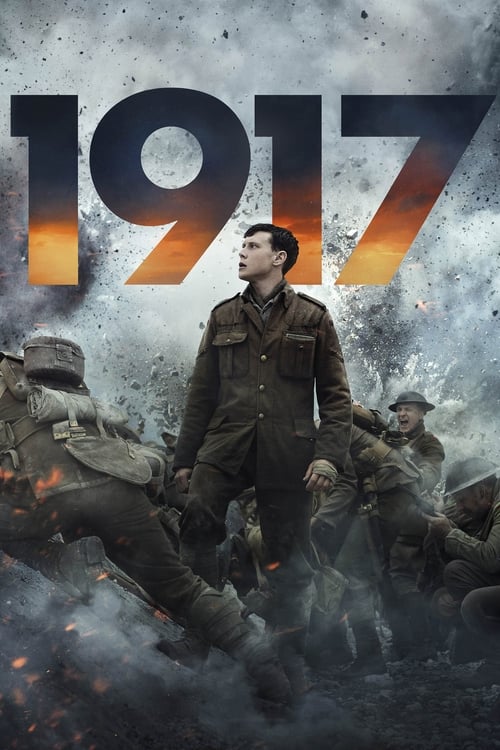
Sam Mendes took the long take concept and asked, “What if we just never cut at all?” 1917 is designed to look like one continuous shot across its entire two-hour runtime. Cinematographer Roger Deakins stitched together longer takes (some running well over eight minutes) with invisible transitions to create the illusion of a single unbroken perspective following two soldiers through the trenches and no man’s land of World War I.
The result is extraordinary. You’re locked to George MacKay’s shoulder, walking when he walks, running when he runs, ducking when shells explode nearby. There’s a sequence where Schofield sprints through a burning French village at night, and the flickering firelight creates these massive shifting shadows that swallow entire buildings. It’s genuinely one of the most visually arresting things I’ve seen in a war film. Some critics argued the gimmick pulls attention away from the story, and that’s a fair point. There are moments where you notice the choreography more than the emotion. But when it works, and it works most of the time, the unbroken perspective creates a proximity to danger that traditional editing simply can’t replicate.
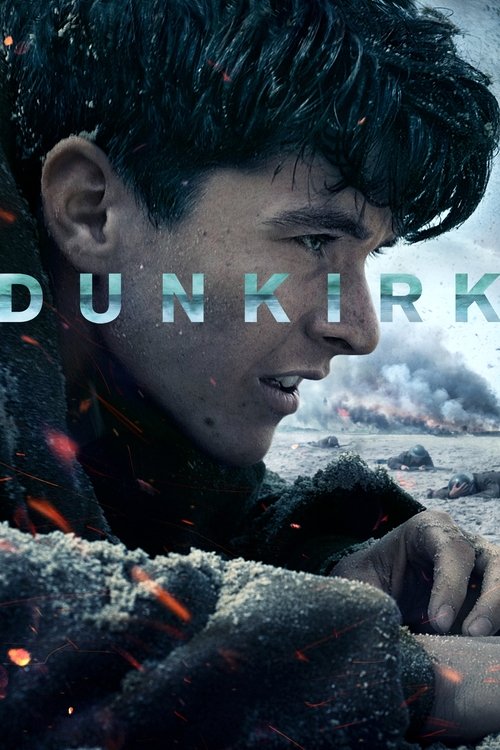
Nolan’s Ticking Clock on the Beach: Dunkirk
Christopher Nolan’s Dunkirk doesn’t have a single famous oner in the way Children of Men does, but it uses extended takes throughout the Mole sequence to brutal effect. The camera lingers on Fionn Whitehead and the other soldiers standing in orderly lines on the beach while Stukas scream overhead, and there are stretches where the shot just holds and holds as bombs walk closer across the sand.
Nolan shot on IMAX film with limited magazine lengths, so the takes aren’t as marathon-length as digital-shot films can achieve. But the restraint is the point. Hoyte van Hoytema’s camera sits right at soldier height, looking down the beach, and the lack of cuts during the bombing runs means you experience the same helpless waiting that those men did. You hear the plane before you see it. There’s no cutaway to a cockpit or a general’s office to relieve the pressure. It just builds.
Lynne Ramsay’s Disorienting Stillness: You Were Never Really Here
This one’s a different kind of long take. Lynne Ramsay’s You Were Never Really Here uses extended, often static shots that force you to sit with Joaquin Phoenix’s Joe as his PTSD fragments his reality. The camera will hold on his face for an uncomfortable stretch, or linger on an empty hallway after violence has passed through it. Ramsay is less interested in showing you the action than in making you feel the aftermath.
There’s a scene where Joe lies on a floor next to a dying man, and the camera simply watches. No score manipulation, no dramatic cut to a wide shot. Just two people on a floor, one of them leaving the world. The take goes on longer than you expect, and the discomfort of that sustained gaze is the whole point. It’s proof that long takes don’t need to involve elaborate camera choreography or technical wizardry. Sometimes just refusing to look away is enough.
Paul Thomas Anderson’s Processing Scene: The Master
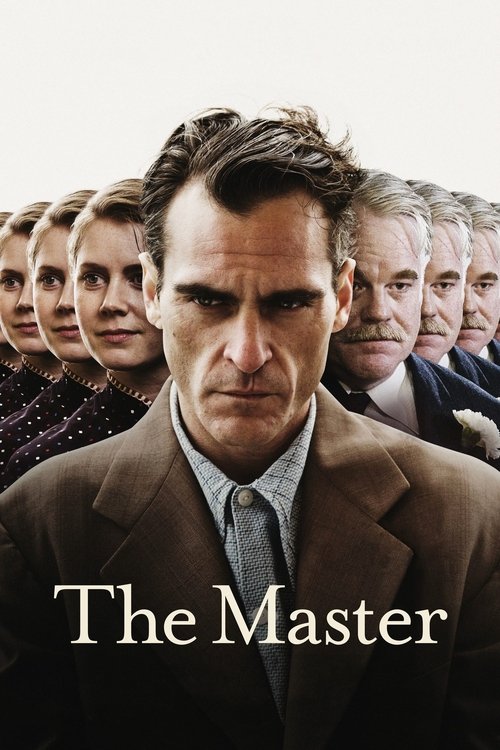
Paul Thomas Anderson loves extended takes, and The Master features several that showcase what happens when you put two powerhouse actors in a room and let the camera roll. The processing scene, where Philip Seymour Hoffman’s Lancaster Dodd interrogates Joaquin Phoenix’s Freddie Quell, plays out in sustained close-ups that rarely cut away. Hoffman fires questions and Phoenix unravels, and the camera just sits there drinking it in.
Anderson trusts his actors completely, and that trust pays off. Phoenix’s face does things in those long takes that editing would only dilute. You see the micro-shifts, the moments where Freddie almost breaks, the way his eyes flicker between defiance and submission. It’s an acting masterclass enabled entirely by the director’s willingness to hold the shot.
Long takes in movies aren’t about showing off, or at least the best ones aren’t. They’re about collapsing the distance between you and the screen. Whether it’s Cuarón throwing you into a warzone, Mendes strapping you to a soldier’s back, Nolan making you wait for a bomb to land, or Ramsay forcing you to sit with grief until it becomes unbearable, these filmmakers understand that sometimes the most powerful thing a camera can do is simply not blink. Browse more of these films and others in our full collection.
Discover Your Next Favorite Film
Browse our curated collection of movie trailers and find something new to watch tonight.
Browse Trailers