The 30 Best Anime Movies of All Time
Films.io Editorial
5 min read
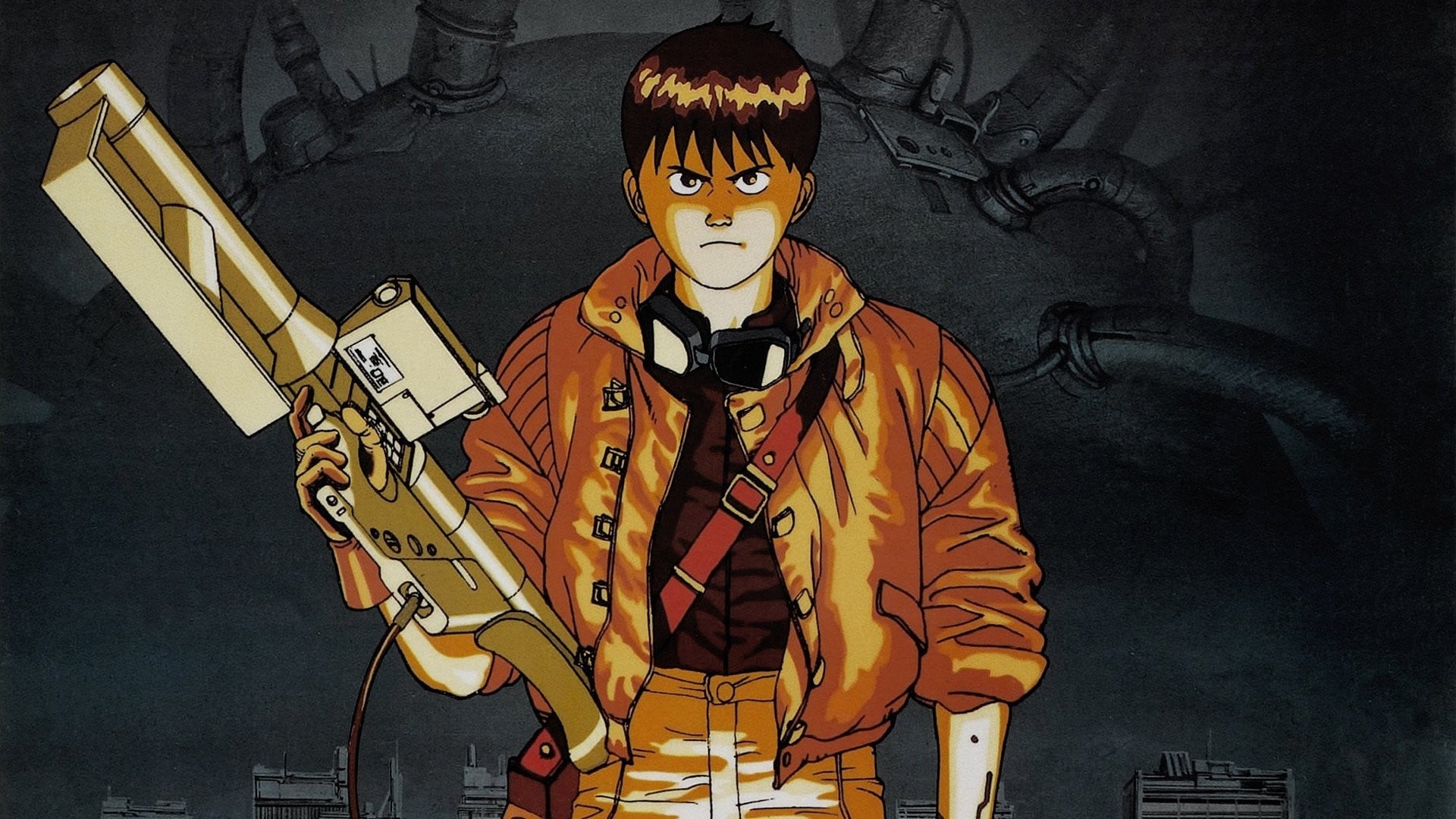
Anime movies operate on a different wavelength than anything else in cinema. The best anime films don’t just tell stories. They obliterate the line between what animation can do and what it should do. Whether it’s a psychological thriller that makes you question your own reflection or a post-apocalyptic fever dream that reshaped an entire medium, the best anime movies of all time have earned their place through sheer artistic ambition. This list covers the essential titles every film fan needs to see.
And here’s the honest truth: narrowing this down is brutal. Akira alone could justify a whole essay, and we haven’t even gotten to Miyazaki yet. The medium spans decades and dozens of subgenres, from intimate character studies to world-ending spectacle. But these are the films that keep coming up in every serious conversation about top anime films, and for good reason.
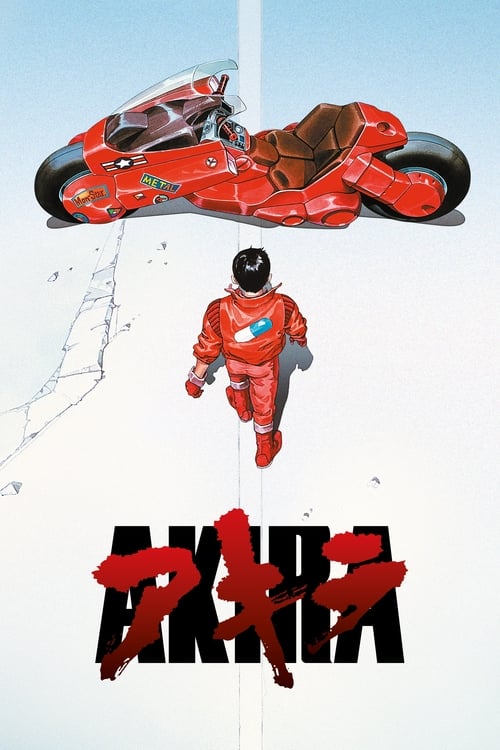
1. Akira (1988)
Katsuhiro Otomo’s Neo-Tokyo nightmare basically invented the modern anime film as we know it. The motorcycle slide alone has been homaged a thousand times, but what really hits is the body horror, the political rot, and Tetsuo’s agonizing transformation into something beyond human comprehension. That final sequence in the Olympic stadium, where flesh and metal merge into a pulsing mass, remains some of the most disturbing animation ever committed to celluloid. This is the film that made Western audiences realize anime wasn’t just for kids.
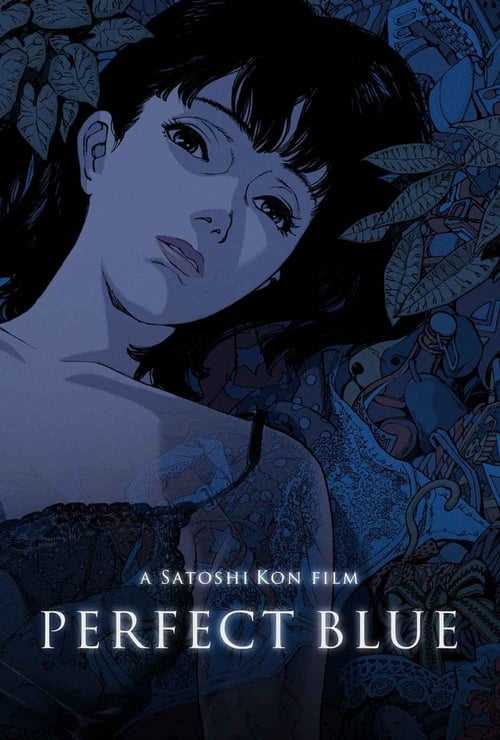
2. Perfect Blue (1998)
Satoshi Kon directed one of the most unsettling films ever made, animated or otherwise. Mima’s descent into paranoia as a pop idol turned actress is the kind of story that gets under your skin and stays there. The recurring motif of Mima staring at her computer screen, reading posts from a stranger who claims to be the “real” her, while her grip on her own identity erodes scene by scene, is genuinely terrifying. Fans and critics have long drawn lines between this film and Darren Aronofsky’s later work, particularly Black Swan. Aronofsky purchased the remake rights to Perfect Blue, and the thematic overlap is hard to ignore, though the exact nature of the influence remains debated. If you only watch one anime thriller, make it this one.
3. Spirited Away (2001)
Hayao Miyazaki’s crowning achievement sends a ten-year-old girl into a bathhouse for spirits, and what unfolds is one of the greatest animated films ever made, full stop. It won the Academy Award for Best Animated Feature, and it deserved it. The quiet train ride over the flooded tracks, where Chihiro sits among faceless passengers as Joe Hisaishi’s piano carries the scene, is pure cinema. No dialogue, no action, just a child processing everything she’s been through. Few films for adults manage that kind of emotional economy.
4. Princess Mononoke (1997)
Miyazaki’s most violent film is also his most morally ambitious. There are no real villains here, just people and gods fighting over resources. Lady Eboshi runs an ironworks that employs former sex workers and lepers, giving the outcasts of feudal Japan dignity and purpose, while simultaneously destroying the forest to fuel her operation. You understand exactly why she does what she does, and that’s what makes the conflict so painful. The Nightwalker’s death and the subsequent wave of destruction is environmental horror on a mythic scale.
5. My Neighbor Totoro (1988)
The gentlest film on this list, and one of the most powerful. Two sisters move to the countryside while their mother recovers from an illness, and they encounter forest spirits. That’s basically the whole plot. But the way Miyazaki captures childhood wonder, how Mei toddles after the tiny Totoros through the underbrush with absolute fearlessness, is extraordinary. And the undercurrent of worry about their mother gives everything a bittersweet edge. Totoro waiting at the bus stop in the rain, mimicking Satsuki’s umbrella posture when a single raindrop thuds on his borrowed umbrella, is one of the great sight gags in animation history.
6. Grave of the Fireflies (1988)
This will wreck you. Isao Takahata’s film about two siblings trying to survive in the final months of World War II tells you how it ends in its opening scene: Seita dies in a train station. The tragedy isn’t a spoiler. It’s the framework. What destroys you is watching the small, preventable cruelties pile up. The aunt’s passive-aggressive rationing. Seita’s teenage pride. The fireflies Setsuko collects, beautiful and dead by morning. Not an easy watch. An essential one.
7. Ghost in the Shell (1995)
Mamoru Oshii’s cyberpunk classic asked questions about consciousness and identity years before Hollywood caught up. The diving scene, where Major Kusanagi sinks into Hong Kong’s harbor while Kenji Kawai’s choral theme fills the soundtrack, is one of the most hauntingly beautiful moments in all of animation. What separates this from lesser sci-fi is how seriously it takes its own philosophy. The Major’s conversations with Batou aren’t action movie filler. They’re the actual point.
8. Nausicaä of the Valley of the Wind (1984)
The film that essentially created Studio Ghibli. It predates the studio’s official founding, but its success gave Miyazaki and Takahata the leverage to build their own house. Miyazaki constructed an entire post-apocalyptic ecosystem here, a toxic jungle teeming with giant insects that humanity fears but doesn’t understand. Nausicaä’s willingness to listen rather than fight makes her one of his most distinctive protagonists. The moment she calms a rampaging Ohmu by standing in its path, arms outstretched, is Miyazaki’s environmental philosophy distilled into a single image.
9. Paprika (2006)
Satoshi Kon’s final completed feature is a kaleidoscopic trip through dreams that influenced a whole wave of filmmakers exploring the boundaries between waking life and the subconscious. The parade sequence speaks for itself: reality and dreams collide in a rolling wave of refrigerators, torii gates, and marching dolls, consumer culture and mythology swallowing the waking world whole. It’s wild, disorienting, and animation operating at the absolute edge of what the medium can express. No live-action film could replicate the sheer visual fluidity Kon achieves here, because animation is the only medium elastic enough to show dreams the way they actually feel.
10. Millennium Actress (2001)
Kon’s most structurally inventive film follows an aging actress named Chiyoko whose life story blurs seamlessly with the roles she played. A documentary crew interviews her, and the film cuts between her memories and her movies until you can’t tell which is which, and neither can she. A chase scene becomes a samurai battle becomes a wartime evacuation, all propelled by the same emotional logic: a woman running after a man she met once. The technique of dissolving the boundary between memory and performance was years ahead of its time, and no one has replicated it this well since.
11. Howl’s Moving Castle (2004)
Miyazaki adapts Diana Wynne Jones’s novel into a swooping anti-war romance where the most interesting transformation isn’t magical, it’s emotional. Sophie gets cursed into an old woman’s body and responds not with despair but with a kind of cranky liberation. She’s more assertive at ninety than she ever was at eighteen. The castle itself, this clanking, wheezing contraption held together by Calcifer’s fire and sheer stubbornness, is peak Ghibli design. And the film’s anti-war message, arriving as the Iraq War dominated headlines, gave it a pointed urgency Miyazaki clearly intended.
12. The Tale of the Princess Kaguya (2013)
Isao Takahata spent over eight years on this watercolor-style adaptation of Japan’s oldest known narrative, The Tale of the Bamboo Cutter, and you can feel every frame. The animation looks like brushstrokes breathing on screen. But the real knockout is Kaguya’s rage scene: confined by court etiquette and suffocating expectations, she breaks into a run, and the art style explodes into frantic charcoal slashes, the careful watercolors replaced by raw, furious energy. Nothing else in cinema looks like that moment. Nothing.
13. Your Name (2016)
Makoto Shinkai’s body-swap romance became the highest-grossing anime film of its time for a reason, and it’s not just the gorgeous backgrounds. The twilight scene on the mountain crater, where Taki and Mitsuha exist in the same space for a few fleeting minutes across different timelines, is an emotional gut punch because Shinkai earns it through an hour of longing and missed connections. Some people find his style sentimental. I think this one justifies every slow push-in on a sunset. When they reach for each other and the light fades, you feel the distance.
14. Neon Genesis Evangelion: The End of Evangelion (1997)
This is what happens when a creator takes the most controversial TV ending in anime history and responds by making something even more confrontational. Hideaki Anno’s apocalyptic finale splits into two halves: a brutal military assault on NERV headquarters and a surreal apocalypse that dissolves individual identity into a single consciousness. The Komm, süsser Tod sequence, a cheerful pop ballad playing over the literal end of humanity, is the kind of tonal dissonance that shouldn’t work and absolutely does. Anno wasn’t trying to give fans what they wanted. He was interrogating why they wanted it.
15. Porco Rosso (1992)
Miyazaki’s most underrated film, and his most personal. A World War I veteran cursed to look like a pig flies seaplanes around the Adriatic, dodging sky pirates and fascists. It’s funny and melancholy in equal measure. Marco Pagot is essentially Miyazaki’s self-portrait: a stubborn craftsman who’d rather fly alone than deal with the world’s ugliness. The aerial dogfights are gorgeous, animated with a fluidity that makes you feel the wind resistance, and the ending is perfectly ambiguous. Does the curse lift? Miyazaki lets you decide.
16. Pom Poko (1994)
Takahata’s strangest film follows a community of tanuki (raccoon dogs) trying to save their forest from Tokyo’s suburban sprawl. It’s hilarious and heartbreaking, often in the same scene. Yes, the tanuki use their shape-shifting abilities in anatomically creative ways. (If you know, you know.) But underneath the absurdity is a genuine elegy for disappearing ecosystems. The final scene, where the surviving tanuki disguise themselves as humans to commute through the neighborhoods built on their former home, lands with devastating irony.
17. Vampire Hunter D: Bloodlust (2000)
Yoshiaki Kawajiri’s sequel to the original Vampire Hunter D is one of the finest action-anime films ever produced. The animation quality is absurd for its era, blending traditional hand-drawn work with early CG in ways that still hold up. The story, a bounty hunter pursuing a vampire noble who has kidnapped a young woman, sounds straightforward until you realize the woman went willingly, and the film’s sympathies shift accordingly. The final act pivots from action to genuine tragedy, and the image of the vampire couple dissolving into light together is surprisingly moving for a movie that starts with a sword decapitation.
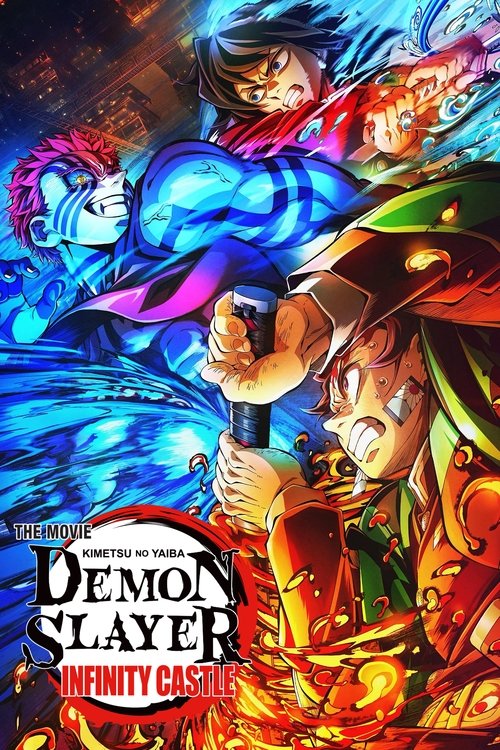
18. Demon Slayer: Kimetsu no Yaiba Infinity Castle (2025)
Ufotable’s animation has always been the main draw of the Demon Slayer franchise, and this film takes it somewhere new entirely. The Infinity Castle setting, a constantly shifting labyrinth of rooms and staircases that fold into impossible geometries, is a visual playground. The fight choreography, particularly the Hashira battles against Upper Rank demons, is jaw-dropping even by Ufotable’s standards. It’s a lot of spectacle, and the emotional beats hit hardest if you’re already invested in the characters. But as pure action anime cinema, the craftsmanship is undeniable.
19. Whisper of the Heart (1995)
Yoshifumi Kondō’s only feature film before his untimely death is a quiet coming-of-age story about Shizuku, a girl who loves books, and Seiji, a boy apprenticing as a violin maker. No magic, no apocalypse, just the terrifying exhilaration of realizing what you want to do with your life and not knowing if you’re good enough. The “Country Roads” sequence, where Shizuku sings her translated lyrics while Seiji plays violin and his grandfather’s friends join in on various instruments, is warmth distilled into three minutes. Ghibli at its most grounded and sincere.
20. Tokyo Godfathers (2003)
Satoshi Kon’s most accessible film is also his funniest. Three homeless people in Tokyo, a middle-aged alcoholic, a former drag queen, and a runaway teenager, find an abandoned baby on Christmas Eve and set out to return her. The coincidences that drive the plot would feel contrived in another director’s hands, but Kon frames them as small miracles, the universe conspiring to give broken people one more chance. The rooftop climax, where Hana catches the falling baby as a gust of wind breaks her fall, is simultaneously absurd and genuinely thrilling. It’s a Christmas movie for people who’ve given up on Christmas movies.
21. Wolf Children (2012)
Mamoru Hosoda’s film about a single mother raising two children who are half-wolf isn’t really a fantasy film. It’s a parenting story that uses the supernatural as metaphor. The scene where young Ame runs through a snowy hillside, his mother Hana chasing after him, both of them tumbling and laughing as Ame shifts between boy and wolf cub, says more about unconditional love than most live-action family dramas manage in their entire runtime. And Hana’s final moment, watching Ame choose the wild over her, is devastating precisely because she lets him go.
22. Kiki’s Delivery Service (1989)
A 13-year-old witch moves to a seaside city, starts a flying delivery business, and loses her powers. Miyazaki never explains the mechanism. You just understand: Kiki’s creative block mirrors the doubt that comes with growing up. Every artist I know has a personal relationship with this movie because losing your magic and not knowing how to get it back is universal. The scene where Kiki can no longer talk to Jiji, her cat, and he just meows back at her, is quietly gutting.
23. Only Yesterday (1991)
Takahata’s most delicate film follows Taeko, a 27-year-old office worker, on a trip to the countryside, where memories of her ten-year-old self keep surfacing unbidden. It doesn’t sound exciting, and it isn’t. It’s something rarer: deeply, quietly true. The pineapple scene, where young Taeko’s family buys their first pineapple and discovers it tastes nothing like they imagined, is a perfect distillation of childhood disappointment, the gap between expectation and reality rendered in fruit. The ending, where Taeko’s younger self and her classmates wave her toward a new life, is earned through two hours of patient, precise emotional archaeology.
24. The Wind Rises (2013)
Miyazaki’s (supposed) final film is a fictionalized biography of Jiro Horikoshi, the engineer who designed Japan’s Zero fighter planes. It’s gorgeous and morally complicated in ways Miyazaki hadn’t attempted before. The dream sequences, where Jiro meets Italian aircraft designer Caproni in shared visions of beautiful planes, are ecstatic and free. But the film never lets you forget what those beautiful planes were built to do. That tension, between the joy of creation and the horror of its application, makes this Miyazaki’s most adult work. The earthquake sequence, animated with a terrifying rumbling sound design rather than realistic effects, is unlike anything else in his filmography.
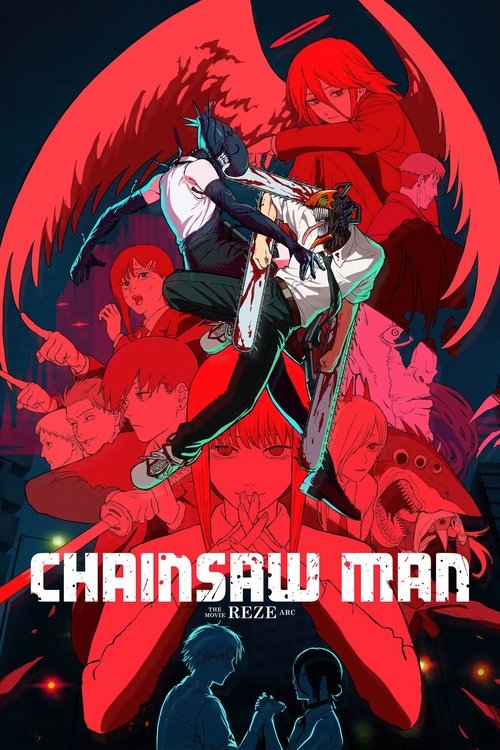
25. Chainsaw Man - The Movie: Reze Arc (2025)
MAPPA delivered something special with this adaptation. The Reze Arc is arguably the most emotionally resonant stretch of Tatsuki Fujimoto’s manga, a doomed summer romance wrapped in ultraviolence, and the film nails the tonal whiplash. Denji’s brief relationship with Reze, a girl who teaches him to swim and takes him to see fireworks, plays out with a tenderness that makes the inevitable betrayal land like a sledgehammer. The pool scene, where Denji floats on his back and the camera holds on the sky, is a rare moment of peace in a franchise that usually communicates through chainsaws.
26. Metropolis (2001)
Loosely inspired by Fritz Lang’s silent classic and filtered through Osamu Tezuka’s manga, Rintaro’s Metropolis is a sci-fi anime set in a towering city stratified by class. Robots do the labor, humans reap the benefits, and an artificial girl named Tima doesn’t know which side she belongs to. The climactic scene, set to Ray Charles’s “I Can’t Stop Loving You” as the city’s ziggurat collapses and Tima reaches for the boy who loved her, is one of the most unexpectedly devastating needle drops in film history. The juxtaposition of that warm, crackling voice against mass destruction is unforgettable.
27. Castle in the Sky (1986)
The first official Studio Ghibli production, and it holds up beautifully nearly four decades later. Laputa’s reveal, this floating island of ancient technology slowly being reclaimed by roots and vines, is Miyazaki at his most awestruck. The robot guardian tending the garden, gently placing a flower on a gravestone while birds nest in its shoulders, is heartbreaking without a single word of dialogue. And the villain, Muska, is one of the few straightforwardly evil characters Miyazaki ever wrote. Sometimes you just need a guy you’re happy to see defeated.
28. Redline (2009)
Seven years of hand-drawn animation went into this hyperkinetic racing film, and you can feel every single one in the density of each frame. The plot is tissue-thin: JP enters an illegal intergalactic race and tries not to die. But as a pure visual experience, Redline is in a class of its own. The final race, where JP’s pompadour flattens against his skull and his car literally transforms from the speed, is anime at its most exhilarating. Takeshi Koike directed this as his debut feature. The fact that he nearly bankrupted the studio to finish it feels appropriate. Some art demands that kind of commitment.
29. Weathering with You (2019)
Shinkai’s follow-up to Your Name is more divisive, and I think that’s exactly what makes it interesting. Hodaka, a runaway teenager in Tokyo, meets Hina, a girl who can briefly clear the rain. The rain animation alone, droplets catching light, puddles rippling across concrete, clouds parting to reveal shafts of gold, is some of the most beautiful water rendering ever put to screen. But the real provocation is the ending: Hodaka makes a deeply selfish choice, and the film fully endorses it. He chooses one person over an entire city. It’s a romantic declaration that doubles as a question about how much sacrifice we can ask of young people, and Shinkai refuses to give you a comfortable answer.
30. Ponyo (2008)
Miyazaki goes full weird with this very loose Little Mermaid riff, and it’s all the better for it. A goldfish princess named Ponyo wants to become human after befriending a five-year-old boy, and the ocean responds by trying to swallow a coastal town. The wave chase scene, where Ponyo sprints across tsunami-sized swells shaped like enormous fish, is animated with the manic energy of a child’s crayon drawing brought to terrifying, joyful life. Every frame was hand-drawn, and you can see the artists having fun. It’s Miyazaki’s most uninhibited film, made with the confidence of a man who has nothing left to prove.
Thirty films, and honestly I could have kept going. The depth of anime cinema is staggering, from Miyazaki’s pastoral fantasies to Kon’s psychological labyrinths to modern spectacles like Demon Slayer: Kimetsu no Yaiba Infinity Castle and Chainsaw Man - The Movie: Reze Arc. If you’re new to the medium, Akira and Perfect Blue are ideal entry points for darker material, while any Ghibli film will ease you in gently. Browse more animated films in our collection, and don’t sleep on the medium that keeps producing some of cinema’s most daring work.
Discover Your Next Favorite Film
Browse our curated collection of movie trailers and find something new to watch tonight.
Browse Trailers