Every Bong Joon-ho Movie Ranked
Films.io Editorial
5 min read
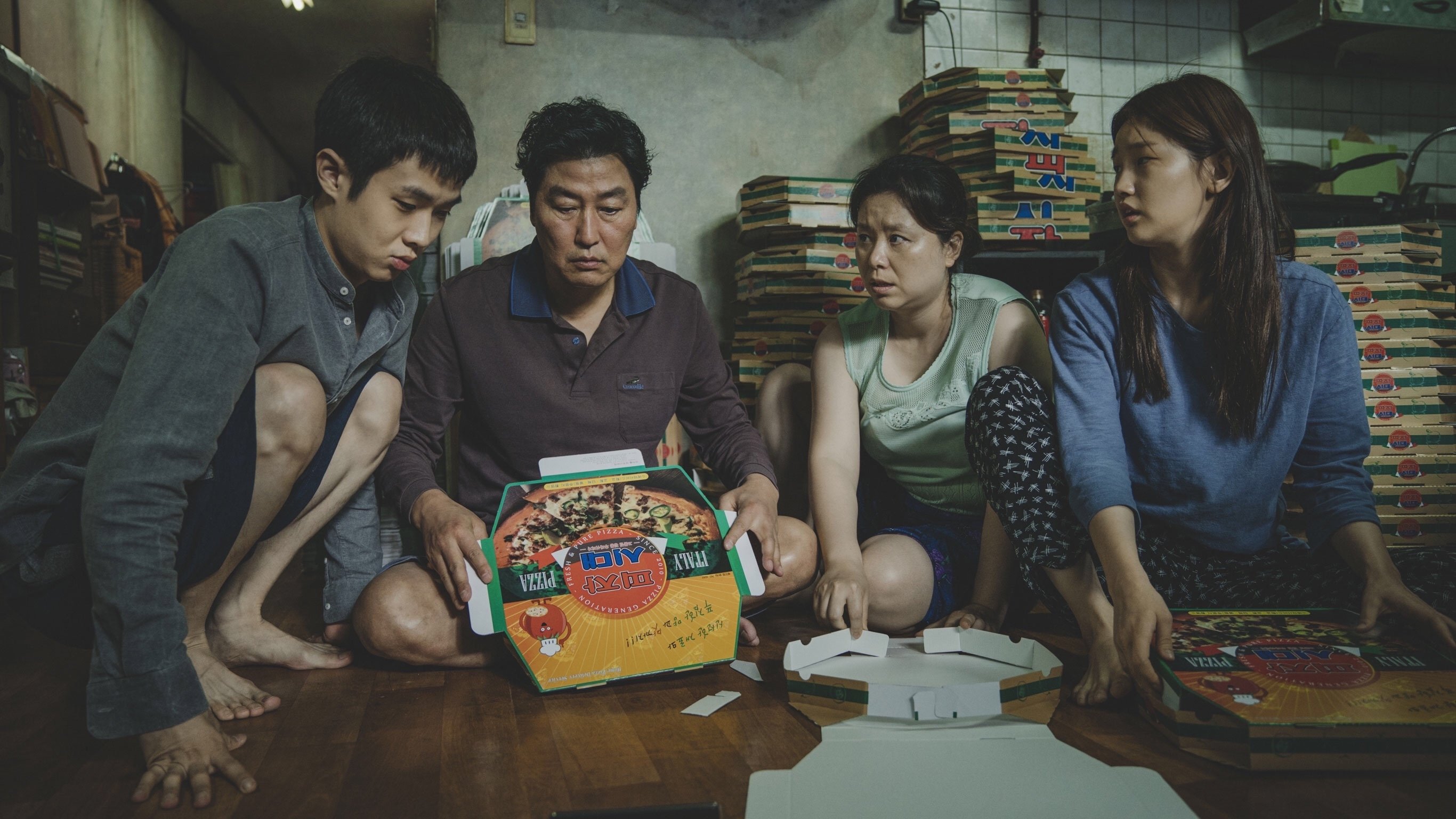
Bong Joon-ho doesn’t make the same movie twice. That’s what makes ranking his films such a fun, slightly maddening exercise. The director behind Parasite has built one of the most varied filmographies in modern cinema, bouncing between genres with the confidence of someone who knows exactly what he’s doing. From creature features to class warfare satires to dystopian sci-fi to whatever Mickey 17 is, every Bong Joon-ho movie ranked against the others reveals a filmmaker who treats genre as a playground rather than a constraint. His films are funny, angry, heartbreaking, and deeply weird, often all at once.
What connects them isn’t style or subject matter. It’s a relentless focus on systems: how they crush people, how people try to game them, and how spectacularly things fall apart when the cracks finally show. If you’ve only seen Parasite, you’ve barely scratched the surface. Here’s every Bong Joon-ho feature film, ranked from bottom to top. (I’m sticking to features here, so his “Shaking Tokyo” segment from the 2008 anthology film Tokyo! doesn’t make the cut, but it’s worth tracking down if you want the full picture.)
8. Barking Dogs Never Bite (2000)
Bong’s debut feature is a dark comedy about a frustrated academic who starts targeting the noisy dogs in his apartment building. It’s messy, tonally uneven, and clearly the work of someone still figuring out his voice. But you can already see the obsession with class dynamics and confined spaces that would define everything that came after. The apartment complex functions as its own little society, complete with hierarchies and petty grievances, which is pure Bong. It’s not essential viewing unless you’re a completist, but there are real flashes of the filmmaker he’d become, particularly in how he frames the building itself as a character.
7. Okja (2017)
This one’s going to be polarizing. Okja has some of the most emotionally devastating sequences Bong has ever shot, particularly the scenes in the slaughterhouse that hit like a punch to the stomach. The relationship between Mija and her super pig is genuinely beautiful, and Bong shoots their early scenes in the Korean countryside with a warmth he rarely allows himself. But Jake Gyllenhaal’s performance is turned up to eleven in a way that feels like it belongs in a different movie entirely, and the Netflix production occasionally smooths over the rough edges that make Bong’s best work so electric. It’s his most sentimental film, which isn’t inherently a bad thing, but it occasionally tips into territory that feels a little too neat for a director who thrives on chaos.
6. Mickey 17 (2025)
Bong’s return after the Parasite victory lap is one of the strangest big-budget movies a major studio has released in years. Robert Pattinson plays Mickey Barnes, an “expendable” sent on a colonization mission to an ice planet, who gets killed on dangerous assignments and then reprinted as a new clone with his memories intact. The trouble starts when one copy doesn’t die on schedule and two Mickeys end up existing at once. It’s Bong doing dark sci-fi comedy with a budget, and Pattinson leans hard into the physical comedy of playing a guy who’s essentially disposable labor. The class commentary is right there on the surface, as always with Bong: Mickey is the lowest rung on a corporate ladder that extends into deep space. The film is messy in places and the tonal shifts don’t always land as cleanly as in his best work, but when it clicks, especially in the scenes where Mickey confronts the expendability of his own existence, it’s unmistakably the product of a singular mind. Not his tightest film, but there’s nothing else quite like it.
5. Mother (2009)
If you haven’t seen Mother, fix that immediately. Kim Hye-ja gives one of the great performances of the 2000s as a woman who will do anything to prove her intellectually disabled son didn’t commit a murder. Bong plays the mystery angle beautifully, but this is really a movie about the terrifying lengths of maternal love pushed past all rational limits. That final scene on the bus, where she uses an acupuncture needle on a pressure point meant to suppress painful memories, is devastating precisely because of what it says about the truth she’s uncovered and her refusal to carry it. The movie is tightly wound and deeply uncomfortable, and it shows Bong working at a smaller scale with total precision. Every frame in this film earns its place.
4. The Host (2006)
Here’s where things get really good. The Host is technically a monster movie. A mutated creature emerges from the Han River and starts snatching people, including a young girl whose bumbling family has to rescue her. But Bong being Bong, it’s also a satire of government incompetence, American military overreach, and the way bureaucracies fail ordinary people at every turn. When the film came out, it became the highest-grossing Korean film ever made, and it’s easy to see why: the creature design is great, the family dynamics are messy and real, and the tonal shifts between slapstick comedy and genuine horror shouldn’t work but absolutely do. Song Kang-ho anchors the whole thing as a lovable screw-up dad who rises to the occasion, and that moment where the family first sees the creature dangling from the bridge before it drops into a full sprint toward the crowd is still one of the best monster reveals in any film. The mix of monster-movie thrills with social commentary set the template for everything Bong would do next.
3. Snowpiercer (2013)
Bong’s English-language debut, adapted from the French graphic novel Le Transperceneige, takes a beautifully absurd premise, all of humanity crammed onto a train that never stops, and turns it into a savage allegory about class, revolution, and the myths we tell ourselves to justify inequality. Chris Evans is excellent as the reluctant leader pushing from the tail section toward the front, and every new car they enter is a revelation. The sushi bar. The rave car. Tilda Swinton’s prosthetic teeth. The movie gets more surreal and more violent as it goes, and the ending is one of the boldest choices any blockbuster has ever made. It’s not subtle, but it’s not trying to be. Bong wanted to make a movie where the metaphor is the plot, and he pulled it off. The train-car structure gives the whole thing a video-game momentum that never lets up.
2. Memories of Murder (2003)
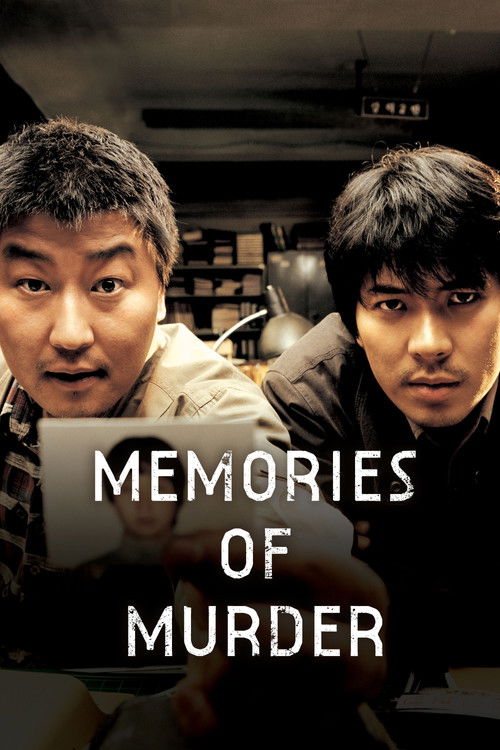
Bong’s second feature is a masterwork of procedural filmmaking. Based on the true story of South Korea’s first serial killer case, it follows two detectives, one a brute who trusts his gut, the other an educated outsider from Seoul, as they chase a killer they’ll never catch. The movie is darkly funny and enormously sad, often in the same scene. Song Kang-ho does career-best work here, taking a character who initially seems like a clown and slowly revealing the desperate intelligence underneath. There’s a scene where the detectives stage a reconstruction of the crime in the rain, the whole thing collapsing into farce, and it captures Bong’s gift for making you laugh right when you should be horrified. The final shot, where Song stares directly into the camera knowing the killer might be sitting in the audience, is one of the great endings in film history. This is the movie that announced Bong as a major talent, and it hasn’t aged a day.
1. Parasite (2019)
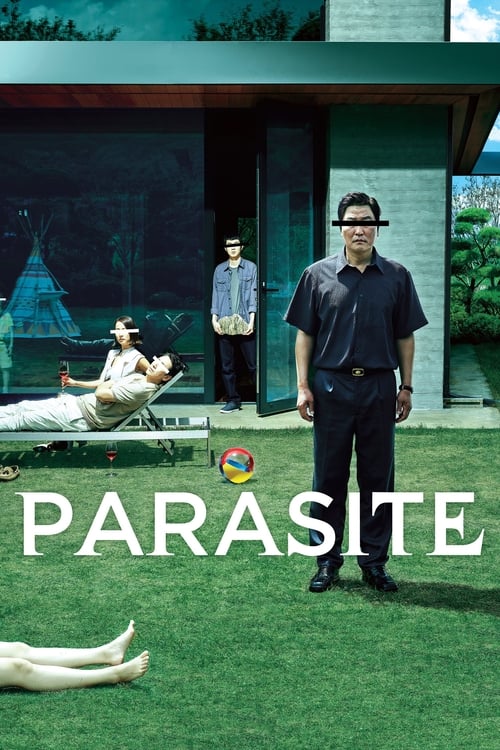
Was there any doubt? Parasite isn’t just Bong’s best film. It’s one of the best films of the 21st century. The story of the Kim family infiltrating the wealthy Park household starts as a wickedly entertaining con-artist comedy and then, in one unforgettable sequence involving a basement door, transforms into something much darker and more desperate. Every detail in this movie is doing double duty. The scholar’s rock. The peach allergy. The smell. The way the Kim family’s semi-basement apartment floods while the Parks sleep soundly on higher ground. Bong’s control of tone here is unreal. He can make you laugh and then knock the wind out of you thirty seconds later.
The Oscar wins, including Best Picture and Best Director, were historic and deserved. But forget the awards for a second. What makes Parasite extraordinary is how specific it is about South Korean class dynamics while being completely universal. Everyone in every country understood what that flood meant. Everyone understood the stairs. That night of the rainstorm, when the Kims huddle in a gymnasium while the Parks plan a garden party, is Bong’s thesis distilled into a single, brutal juxtaposition.
Eight features. Not one of them is boring, and not one of them could have been made by anyone else. That’s a remarkable track record for a director working across more than two decades and multiple languages. Whether he’s making a monster movie, a murder mystery, a sci-fi clone comedy, or a pitch-black satire about class warfare, Bong Joon-ho always finds the human beings trapped inside broken systems and makes you care about what happens to them. If you haven’t watched Memories of Murder yet, seriously, start there. You’ll understand why Parasite wasn’t a fluke. It was inevitable.
Discover Your Next Favorite Film
Browse our curated collection of movie trailers and find something new to watch tonight.
Browse Trailers