Every Robert Eggers Movie Ranked
Films.io Editorial
5 min read
Robert Eggers doesn’t make movies for everyone. He makes movies for people who want to feel the cold, the dirt, the candlelight, and the dread of another era seeping into their bones. Five features in, and ranking every Robert Eggers film is a conversation worth having, because the guy hasn’t made a bad movie yet. He’s made frustrating ones, uneven ones, and ones that swing so hard they nearly miss. But bad? Not once.
What makes ranking Robert Eggers movies so tricky is that his filmography is remarkably consistent in quality while wildly varied in ambition. You’ve got a $3.5 million debut about Puritans and a goat, a black-and-white two-hander about lighthouse keepers losing their minds, a nearly $90 million Viking epic, a reimagining of the most iconic vampire in cinema, and a medieval folk horror about lycanthropy. Every single one is obsessively researched, visually distinct, and completely committed to its world. The Lighthouse might be his leanest and meanest, but even the biggest swings in his catalog have that same unshakable devotion to atmosphere. So how do you stack them?
Here’s how I’d do it.
5. Werwulf (2025)
Eggers’ return to small-scale folk horror after the massive scope of The Northman and Nosferatu sounded like a dream on paper: lycanthropy in an isolated medieval English village, the kind of claustrophobic period dread that made The Witch so effective. And there are stretches of Werwulf where that promise delivers. The production design is predictably immaculate, the cast commits fully to the period dialect, and there are individual sequences of genuine terror that rank with anything in the Eggers filmography.
But Werwulf also feels like it’s caught between two impulses. It wants to be a slow-burn character study about superstition and community paranoia, and it also wants to be a creature feature. The balance doesn’t quite hold. The middle act sags, and some of the mythology feels undercooked compared to the meticulous world-building Eggers brought to his other films. It’s the only entry in his filmography that left me wanting a longer cut rather than a tighter one. Still a good movie. Just not up to the standard he’s set for himself.
4. The Northman (2022)
This is the one that hurts to put second from last, because there’s genuinely great filmmaking in The Northman. Alexander Skarsgård is a wall of muscle and rage as Amleth, and the single-take raid on the Slavic village is one of the most visceral action sequences of the decade. Eggers’ commitment to Viking-era authenticity is staggering. You can practically smell the mud and blood.
But here’s the thing: The Northman is Eggers’ most expensive film and his least personal. The studio pressure shows. The revenge plot, while faithfully drawn from Norse saga, plays out in a way that feels more conventional than anything else he’s done. Nicole Kidman’s monologue in the third act is electric, and the final duel at the volcano’s edge is genuinely mythic. Still, there are stretches in the middle where the movie feels caught between arthouse ambition and blockbuster obligation, and it doesn’t fully satisfy either impulse. It’s the only Eggers film where I check my watch, and that says something.
3. Nosferatu (2024)
Eggers spent years trying to get Nosferatu made, and you can feel that obsession in every frame. This isn’t a remake of Murnau’s 1922 film so much as a complete reimagining, pulling from Bram Stoker’s novel and the German Expressionist tradition to create something that feels ancient and new at the same time. Bill Skarsgård’s Count Orlok is genuinely unsettling, a creature of shadow and rot who barely seems human. Lily-Rose Depp’s Ellen Hutter carries the emotional weight of the film, and the psychosexual tension between her and Orlok gives the story a dimension that most vampire movies don’t even attempt.

The production design is Eggers at his most lavish. Every room, every costume, every shaft of light feels like a painting you’d find in a haunted museum. Where Nosferatu falls just short of the top two is in its final act, which rushes toward a resolution that doesn’t land with the same power as everything that preceded it. The buildup is extraordinary. The payoff is good, not great. But those first 90 minutes? Some of the best horror filmmaking of the 2020s.
2. The Witch (2015)
The movie that started it all. The Witch, subtitled A New-England Folktale, arrived in 2015 and immediately announced Eggers as a filmmaker with a singular vision. A Puritan family, exiled from their plantation, slowly tears itself apart on the edge of a New England forest. Something is in those woods. The family’s crops fail. Their baby vanishes. And Thomasin, played by a then-unknown Anya Taylor-Joy, becomes the focus of her family’s mounting suspicion and religious terror.
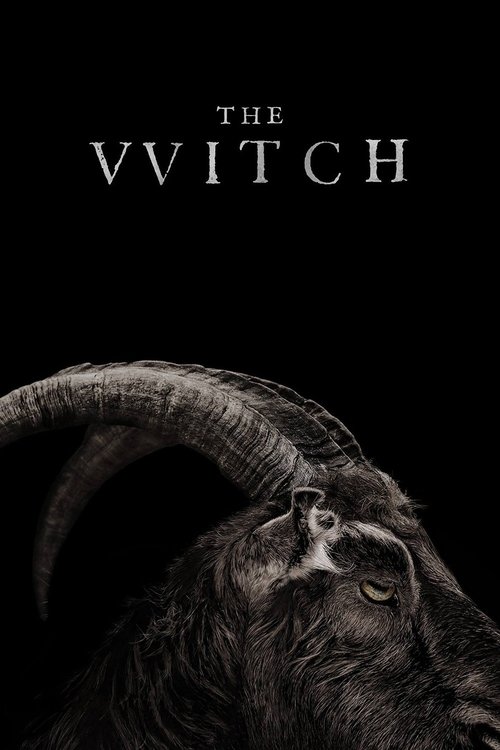
What makes The Witch special isn’t the horror itself. It’s the patience. Eggers lets the tension build through silence, through the sound of wind through bare trees, through Anya Taylor-Joy’s face as she realizes her family sees her as the enemy. The final scene, with Thomasin walking into the forest and choosing the devil’s bargain, is one of the most chilling endings in modern horror. It’s a film about how religious extremism creates the very evil it fears, and it does it without ever raising its voice. The fact that it was a debut is kind of absurd.
1. The Lighthouse (2019)
This is Robert Eggers’ best film. I don’t think it’s particularly close.
The Lighthouse is a two-man show starring Robert Pattinson and Willem Dafoe as lighthouse keepers stranded on a remote New England island in the 1890s. They drink. They fight. They hallucinate. They descend into a shared madness that’s equal parts Melville, Lovecraft, and Ingmar Bergman. Shot in black-and-white on 35mm with a boxy 1.19:1 aspect ratio, the film looks like something excavated from another century.

Dafoe delivers a performance for the ages. His monologue about Pattinson’s cooking (“Yer fond of me lobster, ain’t ye?”) is simultaneously hilarious and terrifying. Pattinson matches him beat for beat, playing a man whose grip on reality loosens with every passing storm. The film is funny, disturbing, mythological, and deeply strange. It’s the purest expression of what Eggers does best: trapping characters in a historical pressure cooker and watching them crack.
The Lighthouse works because it doesn’t explain itself. Is the light supernatural? Is Dafoe’s Thomas Wake a god, a devil, or just a mean old drunk? The film doesn’t care about giving you answers. It cares about making you feel the isolation, the madness, the terrible weight of being trapped with another person on a rock in the middle of the ocean. No other Eggers film achieves that level of psychological intensity.
Five films. Five completely different textures, tones, and time periods. And not a single lazy effort in the bunch. Eggers is a director who treats historical accuracy not as decoration but as the foundation for genuine terror. Whether he’s working with a skeleton crew or a blockbuster budget, the obsession is the same. If you haven’t explored his work yet, start with The Lighthouse and work your way through. And if you’re hungry for more atmospheric horror and drama, browse our full collection for films that share that same unshakable commitment to mood and craft.
Discover Your Next Favorite Film
Browse our curated collection of movie trailers and find something new to watch tonight.
Browse Trailers