The Brutalist Review: Brady Corbet's American Epic
Films.io Editorial
5 min read
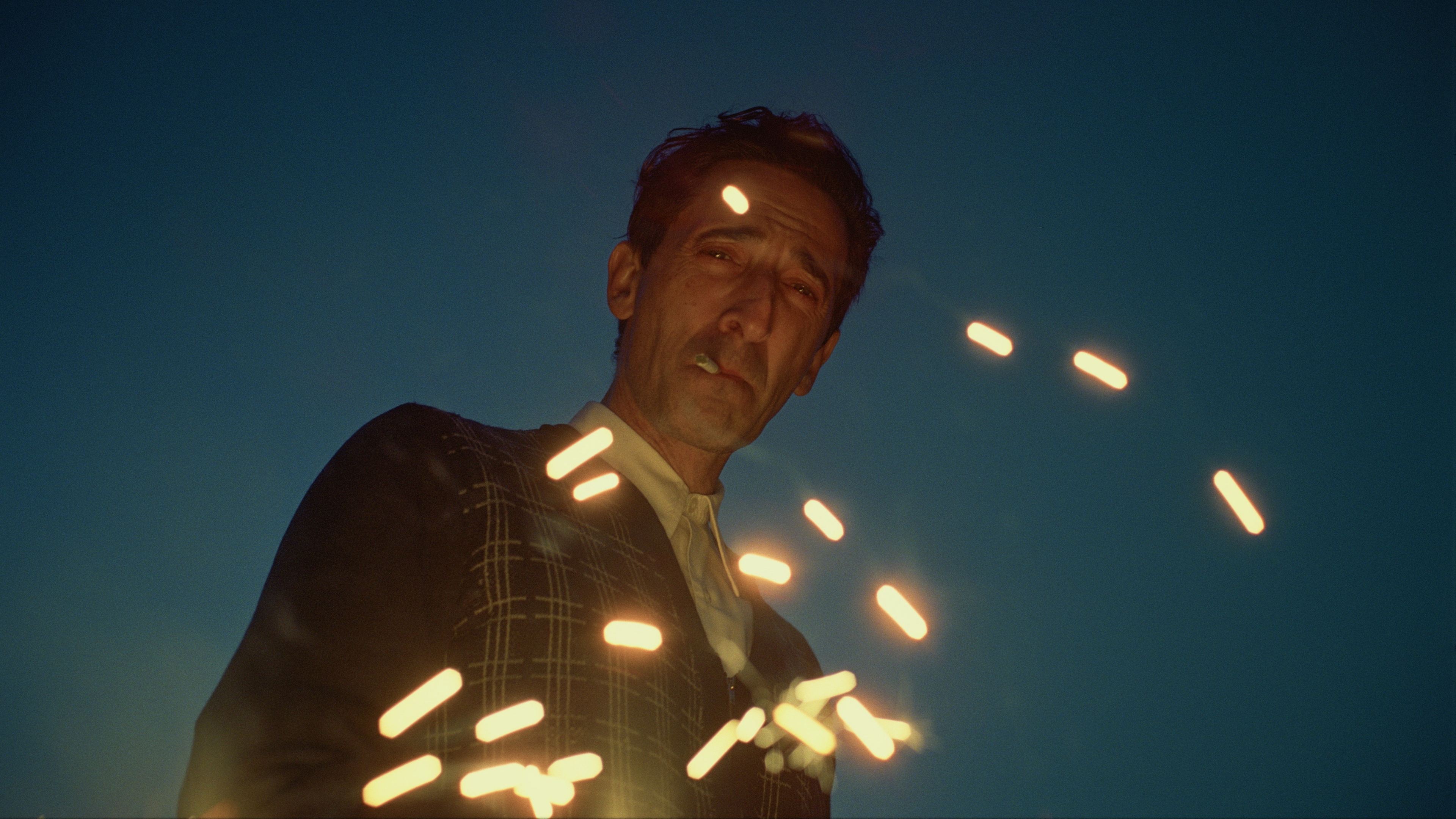
Brady Corbet’s The Brutalist is a three-and-a-half-hour movie about an architect, and it shouldn’t work. A period drama clocking in at 215 minutes, shot on VistaVision, about a Hungarian Jewish man designing a building in postwar Pennsylvania? On paper, it sounds like the kind of film festival endurance test that wins awards and empties theaters. But here’s the thing: this film earns every minute.
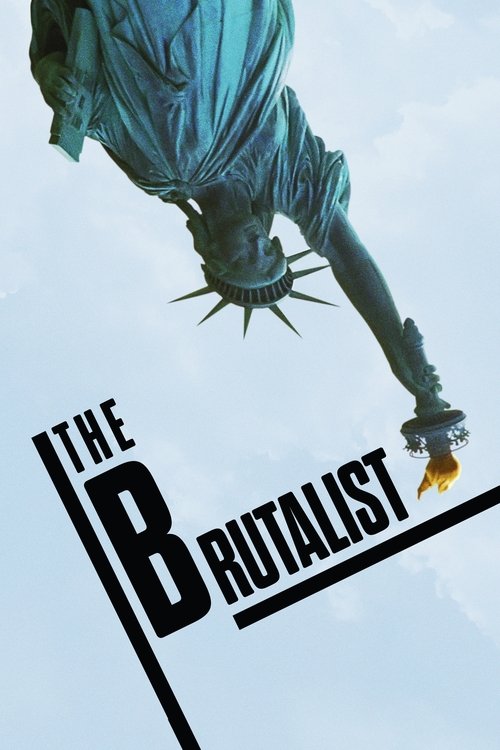
Adrien Brody plays László Tóth, a fictional architect who arrives in America after surviving the Holocaust. He’s broken, brilliant, and desperate. The opening sequence, where László stumbles off a ship and sees the Statue of Liberty upside down from his vantage point, tells you everything about how Corbet sees the American immigrant story. It’s not a warm embrace. It’s disorienting. It’s violent in its own quiet way. And from that first frame, Brody commits to something extraordinary. If you remember what he did in The Pianist, you know he can carry the weight of a survivor’s story. This goes even deeper.
Adrien Brody Carries the Whole Thing on His Back
This is a Brody performance that belongs right alongside his Oscar-winning work in The Pianist. He’s thinner here, hollowed out, and he plays László as a man who communicates more through silence than speech. Watch how he handles the early scenes working in his cousin’s furniture shop. The humiliation isn’t played for sympathy. Brody lets it sit there, uncomfortable, and you understand exactly what it costs this man to sand down someone else’s cabinets when he once designed buildings that mattered.
There’s a scene in the first act where László redesigns a library for a wealthy benefactor named Harrison Lee Van Buren, played by Guy Pearce. László works through the night, and when the finished space is revealed, the camera doesn’t rush to show you the room. It stays on Brody’s face. That mix of exhaustion and pride and barely suppressed terror that someone will take this away from him too. It’s the kind of acting that disappears into the character so completely you forget there’s a performance happening at all.
Pearce, for his part, is perfectly cast as Van Buren. He plays the American patron with a smile that never quite reaches his eyes. He’s generous. He’s also possessive. The power dynamic between the two men is the engine that drives the second half of the film, and Pearce makes Van Buren genuinely unsettling without ever tipping into caricature. You believe he thinks he’s being kind. That’s what makes it so disturbing.
The Architecture Becomes the Story
Corbet does something clever with the actual architecture in the film. László’s designs aren’t just background production design. The community center he’s commissioned to build becomes a physical representation of his trauma. The concrete is raw, exposed, unfinished in the brutalist style. It’s beautiful and aggressive at the same time. Corbet and cinematographer Lol Crawley shoot these structures the way other filmmakers shoot landscapes, with genuine awe for the geometry of them.
The VistaVision format is a real statement here. It gives the film a width and clarity that digital can’t replicate. Pennsylvania has never looked like this on screen. The wide shots of construction sites, the cramped interiors of László’s temporary apartments, the cavernous emptiness of the unfinished community center. Everything feels both epic and intimate, which is exactly the tension the film operates on.
There’s an intermission. A built-in break at around the 100-minute mark. It’s a bold choice that could feel pretentious, but it actually functions like a chapter break in a novel. The first half establishes László’s arrival and his complicated relationship with Van Buren. The second half, which jumps forward in time, deals with the consequences of that relationship and the arrival of László’s wife Erzsébet, played by Felicity Jones. The structure reminded me of how There Will Be Blood uses its sprawling runtime to chart one man’s slow corruption by American capitalism. Both films understand that some stories need room to breathe across decades.
Felicity Jones and the Second Half Shift
Jones is terrific here, and she has to do a lot with limited screen time compared to Brody. Erzsébet arrives in America damaged in her own way, and Jones plays the reunion scene with László not as a Hollywood embrace but as two people who barely recognize each other anymore. There’s a physical distance between them even when they’re in the same room, and Jones makes Erzsébet’s intelligence and frustration palpable without a single monologue explaining how she feels.
The film’s second half is where The Brutalist will lose some viewers, and I’ll be honest about that. The pacing slows. The narrative becomes more elliptical. There’s a sequence involving a trip to Europe that feels like it could have been trimmed by fifteen minutes without losing anything essential. Corbet is clearly in love with every scene he’s created, and sometimes that love translates to indulgence. The three-and-a-half-hour runtime isn’t padding, but it occasionally feels like a film that doesn’t know when to let a moment end.
Joe Alwyn shows up as Van Buren’s son, and he brings a different kind of menace to the family dynamic. It’s a smaller role, but it adds another layer to the film’s central question about what America actually offers its immigrants. Opportunity or exploitation? Or some inseparable combination of the two?
The Real Cost of the American Dream
The conversations around this film tend to focus on the performances and the runtime, but The Brutalist is really about something more specific than the general immigrant experience. It’s about the way American capitalism absorbs talent. László is gifted. Van Buren recognizes that gift. And then Van Buren uses it, reshapes it, takes credit for it. The building that László designs becomes Van Buren’s legacy, not his own. That’s a devastating idea, and Corbet develops it with patience rather than heavy-handedness. There’s a similar dynamic at work in Schindler’s List, where lives are saved but ownership of the narrative shifts to the man with the money and the power. Spielberg’s film operates in a more explicitly heroic register, but both movies understand that survival in someone else’s system comes at a cost the survivor rarely gets to name.
The score, by Daniel Blumberg, deserves its own mention. It’s discordant and beautiful, heavy on strings and silence. It doesn’t tell you how to feel. During the construction sequences, the music merges with the sounds of machinery until you can’t tell where the score ends and the ambient noise begins. It’s one of the best film scores I’ve heard in years.
Look, this movie isn’t for everyone. It’s long. It’s demanding. It doesn’t provide easy catharsis or a tidy ending. But if you’re the kind of viewer who loves dramas that trust their audience enough to sit in discomfort, The Brutalist is a remarkable piece of filmmaking. Brody gives the performance of his career. Corbet, who’s only in his mid-thirties, directs with the confidence of someone twice his age. And the film itself does what great architecture does: it takes up space in your mind and refuses to leave. You can explore The Brutalist on our site, and if you’re in the mood for more ambitious, slow-burn stories, browse our full collection for films that demand your full attention.
Discover Your Next Favorite Film
Browse our curated collection of movie trailers and find something new to watch tonight.
Browse Trailers