Hamnet Revisited: How Chloé Zhao's Grief Epic Holds Up
Films.io Editorial
5 min read
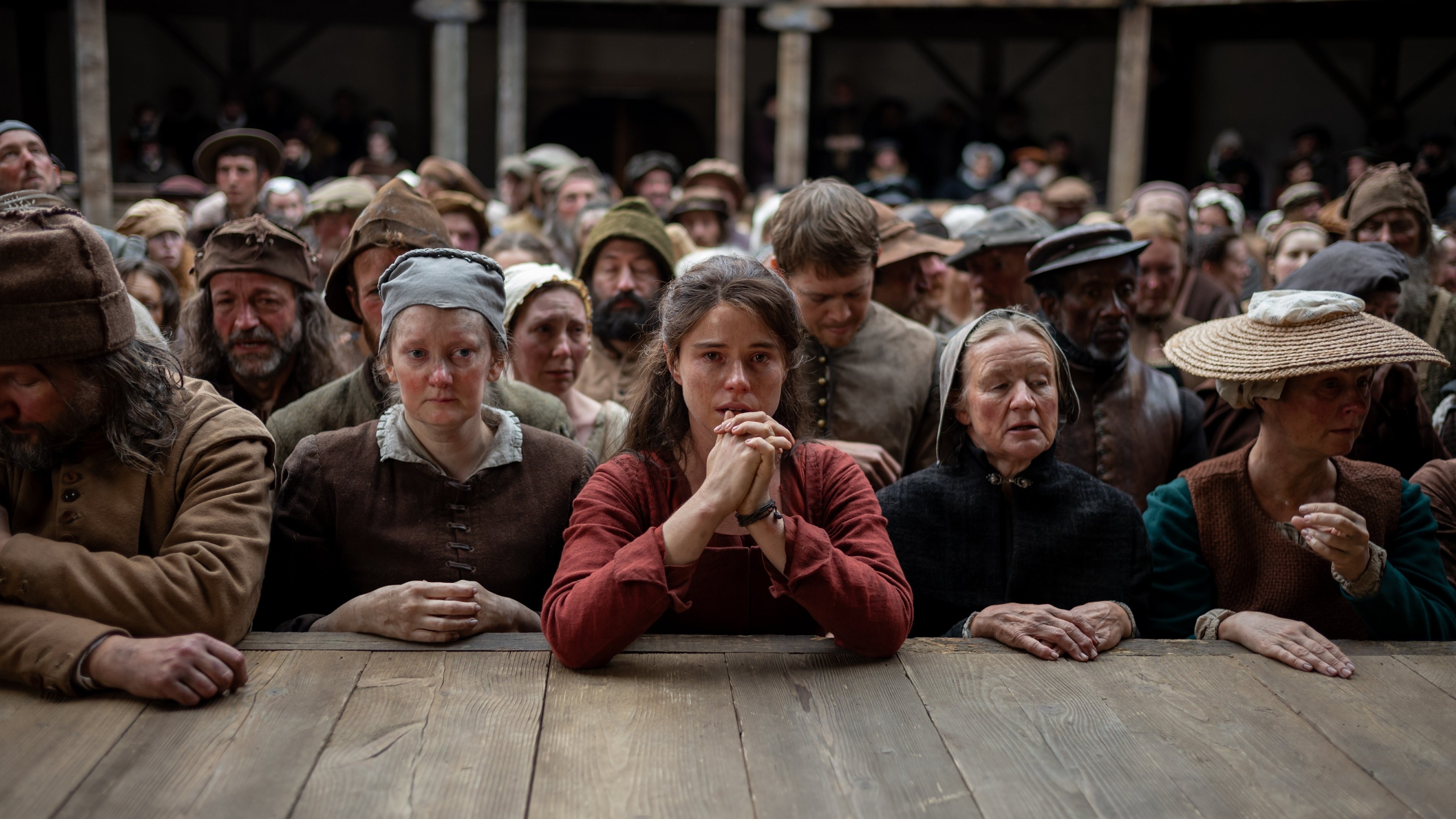
Hamnet opens with a boy collapsing in a garden, and for the next two hours, Chloé Zhao refuses to let you look away from the grief that follows. This isn’t a Shakespeare biopic. It’s barely about Shakespeare at all. It’s about Agnes, the woman history mostly forgot, and the son whose death broke something in her that no amount of poetry could fix. If you came to Hamnet expecting iambic pentameter and theatrical grandeur, you learned fast to recalibrate. Zhao made something rawer than that. Something that sits in your chest like a stone. And now, over a year after its release, it’s only grown in stature.
Based on Maggie O’Farrell’s acclaimed 2020 novel, Hamnet tells the story of Agnes (Jessie Buckley) and her husband, a glove-maker’s son from Stratford who happens to write plays in London. The film barely names him. He’s just “the husband,” “the father,” the man who isn’t there when the plague creeps into their home and takes their eleven-year-old boy. Zhao strips away every literary veneer and gives us something that feels less like a period drama and more like a documentary about loss. The film sits at 87% on Rotten Tomatoes and 84 on Metacritic, numbers that feel right for a quiet, demanding piece of filmmaking that earned every bit of praise it received.
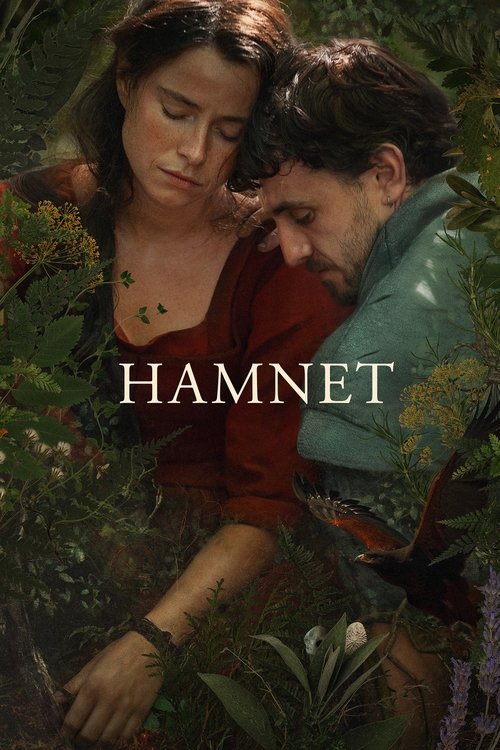
Jessie Buckley Disappears
Let’s talk about the performance at the center of this film. Jessie Buckley as Agnes is the kind of work that makes you forget you’ve ever seen the actor in anything else. She moves through the film like a woman who knows things the rest of the world doesn’t, who reads illness in the air the way other people read books. O’Farrell’s novel is built around Agnes’s almost supernatural sensitivity to the natural world, and Buckley translates that interiority into pure physicality. She lifts her face into the wind, goes still, and you can feel her registering something the other characters can’t.
This is a performance that ended up dominating awards conversations, and rightly so. Buckley isn’t relying on big emotional explosions. The grief lives in her hands, in the way she pulls herbs from the garden, in the way she touches her children’s faces. When Hamnet falls ill and Agnes scrambles for help, Buckley doesn’t scream or wail. She moves with a terrifying urgency that’s worse than screaming. You feel the panic in your own body.
What impressed me most, and what continues to impress on rewatch, is how much Buckley conveys through silence. Zhao gives her extended sequences with no dialogue, just action and reaction, and Buckley fills every frame. It’s physical, intuitive work that never feels calculated. You’re watching a woman think and feel in real time, and it remains among the best screen performances I’ve seen in years.
Zhao Trusts the Silence
After Nomadland and Eternals, people weren’t sure which Chloé Zhao would show up for Hamnet. The intimate naturalist or the blockbuster director? The answer was neither, exactly. This is Zhao at her most disciplined. She shed every impulse toward spectacle and made a film that’s almost monastic in its restraint.
The camera sits low. It watches from doorways. It lingers on hands kneading bread, on mud on boots, on the way light moves through a window in an empty room. Zhao and cinematographer Joshua James Richards (her frequent collaborator) shot the film with a muted, damp palette that makes Stratford feel like a place where illness would spread fast and remedies would be few. There’s no warmth to the light. Even the summer scenes feel overcast.
What’s remarkable is how little the film relies on its score. Long stretches play out in near-silence, broken only by birdsong, creaking floorboards, the rasp of a child’s breathing. When music does arrive, it’s sparse enough that individual notes feel like events. The restraint forces you to lean in, to pay attention to details that a louder film would drown out. At two hours and six minutes, Zhao trusts the audience to stay with her, and the pacing mostly rewards that trust.
Paul Mescal and the Problem of Absence
Paul Mescal plays the husband, and it’s a tricky role. Shakespeare in this story is defined by not being there. He’s in London. He’s always in London. When he does come home, he’s distracted, affectionate but slightly performative, already composing in his head. Mescal plays this beautifully. There’s a warmth to him that makes you understand why Agnes fell for him, and a selfishness that he doesn’t bother to hide because he doesn’t even see it.
The dynamic between Mescal and Buckley is the engine of the film. Their early scenes together have a physical chemistry that’s almost uncomfortably intimate, shot with the kind of closeness that makes you feel like a voyeur. But as the years pass and the distance between them grows, Zhao stages their scenes with more and more space in the frame. By the time Hamnet gets sick, they’re rarely in the same shot. The geography of the film tells the story of a marriage coming apart.
Here’s my one real criticism of this thread: Mescal gets slightly shortchanged in the back half. The novel gives more room to the husband’s guilt and his process of turning grief into Hamlet. The film chooses to stay almost entirely with Agnes, which is the right call emotionally but leaves the husband feeling a bit thin by the end. You want one more scene with him. One more moment where the mask drops completely.
The Plague Sequences Hit Different
There’s no way to watch the plague scenes in Hamnet without thinking about recent history, and Zhao knows it. She doesn’t draw the parallel overtly, but the texture is there: the locked doors, the fear of contact, the desperate herbal remedies that might not work, the way a community fractures when death moves through it.
The film’s depiction of Hamnet’s illness is devastating in its ordinariness. One child gets better. The other doesn’t. Agnes does everything she can for both. The unfairness isn’t dramatic. It’s statistical. Buckley plays the growing realization that her son won’t recover with a stillness that’s almost unbearable to watch.
Emily Watson deserves real attention here as Agnes’s mother-in-law, Mary. She brings a grounded toughness to a woman who’s already buried children and knows what’s coming before Agnes will admit it. Watson is one of those actors who can communicate volumes with a single look, and Zhao uses her sparingly enough that every moment she’s on screen carries weight. Young Jacobi Jupe as Hamnet is also strong. He doesn’t have many scenes, but the ones he has count.
Adapting O’Farrell’s Interior World
O’Farrell’s novel was widely considered difficult to adapt. It works through interior monologue, through Agnes’s sensory perception of the world, through time shifts that flow like memory rather than chronology. Zhao’s solution is to replace interiority with physicality. Where the novel describes Agnes sensing the world around her, the film shows Buckley’s body responding: nostrils flaring, shoulders tightening, hands going still over a mortar and pestle. It’s a smart translation that respects the source material without trying to replicate its literary techniques on screen.
The screenplay makes smart compressions too. The novel’s exploration of Agnes’s early life is condensed, and the narrative stays focused on the central years of marriage, distance, and loss. The film’s approach to Shakespeare’s work is oblique, almost defiant. It refuses to treat the creation of Hamlet as a triumphant artistic act. Instead, the connection between the son’s death and the play’s creation sits in the background like an accusation. It’s not interested in the writing life. It’s interested in what the writing cost.
Not Without Its Quiet Flaws
Look, this movie isn’t perfect. There are stretches in the second act where the pacing sags. Joe Alwyn appears in a supporting role that feels underwritten, and he doesn’t bring enough texture to elevate the material beyond what’s on the page. There are moments where Zhao’s naturalism tips into something almost too austere, where you wish for a single shot of warmth or color to break the grey palette.
And the film’s refusal to engage more directly with Shakespeare’s work beyond its final stretch might frustrate viewers who came specifically for literary insight. This isn’t Shakespeare in Love. You won’t learn anything about Elizabethan theater. You’ll learn about what it feels like to lose a child and watch someone else turn that loss into entertainment.
But those are minor complaints about a film that does what it sets out to do with extraordinary precision. Hamnet is a grief film that respects grief enough not to sentimentalize it. It trusts its audience to sit in the discomfort, to watch a mother lose her child without the safety net of swelling strings or redemptive speeches.
Jessie Buckley’s Agnes is the performance people were still talking about well into awards season, and for good reason. Zhao proved that her best work happens on a small scale, with natural light and human faces. If you’re in the mood for a different kind of quiet, intimate filmmaking this summer, today also sees the release of Paweł Pawlikowski’s Fatherland, another stripped-back period drama that trusts its audience. And if you want to trace Zhao’s evolution, revisit Nomadland, which shares Hamnet’s patience and eye for landscape but applies it to a very different kind of American loneliness. As for Hamnet itself, if you haven’t seen it yet, clear your evening. And don’t make plans for afterward. You’re going to need to sit with this one for a while.
Discover Your Next Favorite Film
Browse our curated collection of movie trailers and find something new to watch tonight.
Browse Trailers