16 in Cinema: The Greatest Year in Movies?
Films.io Editorial
5 min read
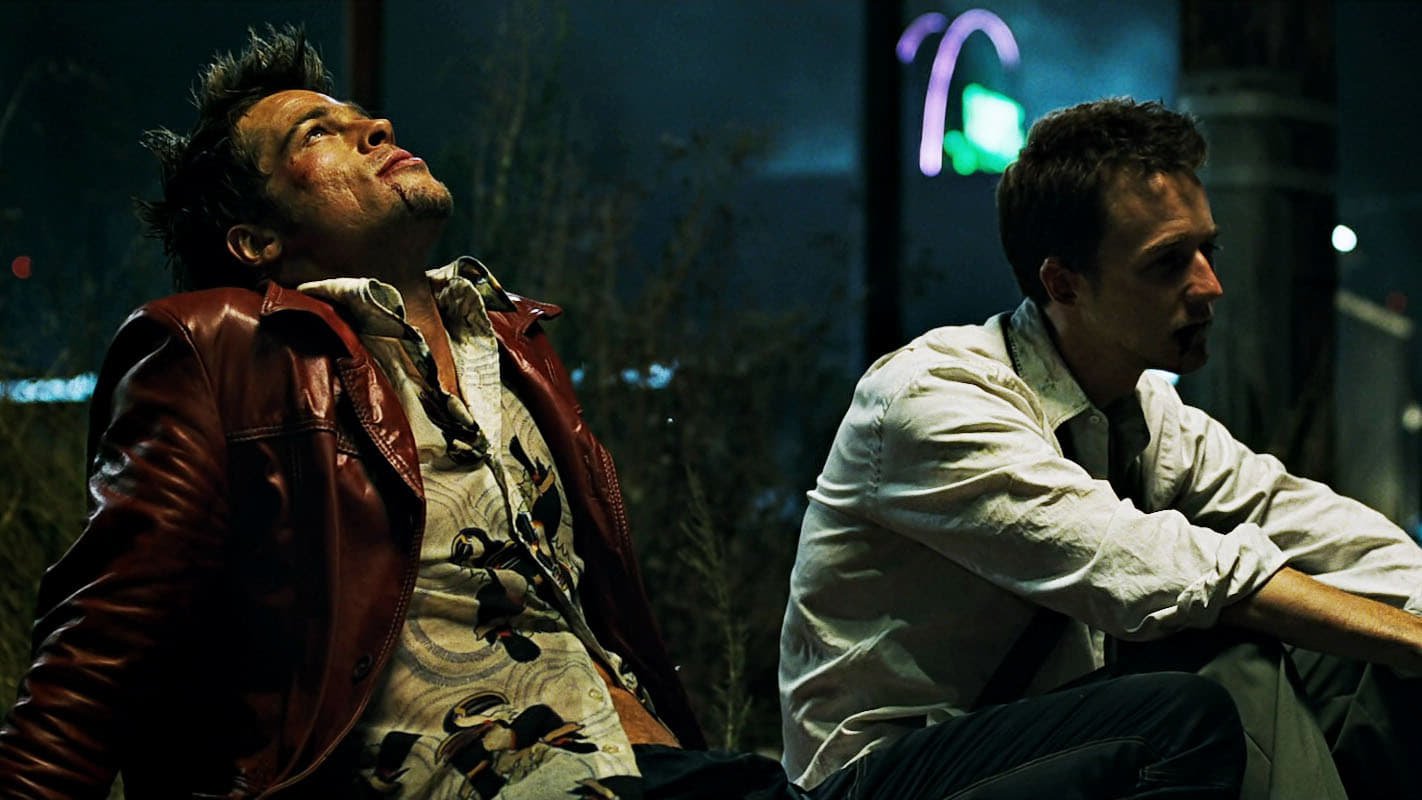
Every year, someone floats the question: what’s the greatest year in film history? You’ll hear arguments for 1939 (Gone with the Wind, The Wizard of Oz), for 1994 (Pulp Fiction, Shawshank), and for 1974 (Chinatown, The Godfather Part II). But when you actually line up the movies, 1999 is almost impossible to beat. Fight Club, The Matrix, American Beauty, The Sixth Sense, and that’s barely scratching the surface. The best movies of 1999 didn’t just dominate the box office or sweep awards season. They rewired the way we think about movies, masculinity, reality, corporate life, and American identity. More than 25 years later, these films haven’t faded. If anything, they’ve gotten sharper.
What made 1999 the greatest year in movies? It wasn’t one genre or one movement. It was everything, all at once. You had David Fincher deconstructing consumer masculinity in Fight Club. The Wachowskis bending the laws of physics. Sam Mendes peeling back suburban facades. M. Night Shyamalan delivering the twist that launched a thousand imitators. Frank Darabont making grown adults weep in theaters. Mike Judge turning office drudgery into comic gold. Brendan Fraser channeling Indiana Jones. Heath Ledger singing on bleachers. Stephen Chow struggling to land a part bigger than “extra.” And that’s still not the full picture.
“I Am Jack’s Complete Lack of Surprise”
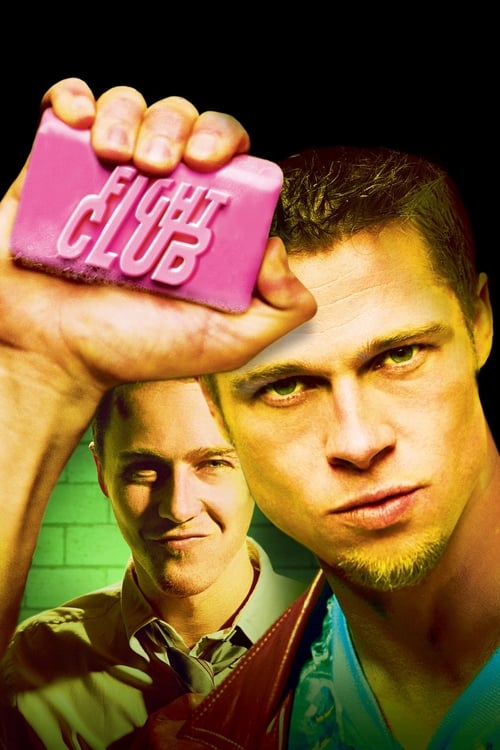
Fight Club is the film that defined 1999’s rebellious spirit. David Fincher took Chuck Palahniuk’s novel and turned it into a Molotov cocktail aimed at late-‘90s consumer culture. Brad Pitt’s Tyler Durden became an instant icon, but the movie’s real power sits with Edward Norton’s nameless narrator, a guy so hollowed out by IKEA catalogs and corporate drudgery that he invents an alternate self just to feel something.
The genius of Fight Club is that it works on two levels simultaneously. On the surface, it’s a visceral, funny, endlessly quotable movie about guys punching each other in basements. Underneath, it’s a savage critique of the very audience cheering those punches on. Fincher knew exactly what he was doing. The film flopped at the box office but became one of the most rewatched movies in DVD history, a trajectory that tells you everything about how 1999 was ahead of its time.
The Red Pill and the Rose Petals
If Fight Club was about smashing the system from the inside, The Matrix asked a bigger question: what if the system isn’t even real? The Wachowskis created a visual language that every action movie since has tried to copy, from bullet time to that lobby shootout, but the ideas underneath the spectacle are what keep it alive. The choice between comfortable ignorance and painful truth resonated in 1999, and it resonates now. Keanu Reeves wasn’t just an action star here. He was an audience surrogate waking up to a world he didn’t fully understand. That feeling hasn’t gone away.
The same year gave us American Beauty, Sam Mendes’ debut feature that won Best Picture and launched a hundred debates. Kevin Spacey’s Lester Burnham, a middle-aged suburban dad who quits his job and starts lifting weights to impress a teenager, was the anti-hero nobody asked for but everybody watched. The film’s reputation has shifted over the years, and honestly, some of that is deserved. The “plastic bag” monologue lands differently now than it did in 1999, and Spacey’s off-screen legacy has complicated how people engage with the character. But strip all that away and you still have a razor-sharp script by Alan Ball, Conrad Hall’s extraordinary cinematography, and Annette Bening doing career-best work as Carolyn. It’s a flawed movie about flawed people, and that messiness is part of what made 1999 so interesting.

“I See Dead People” (And So Did Everyone Else)
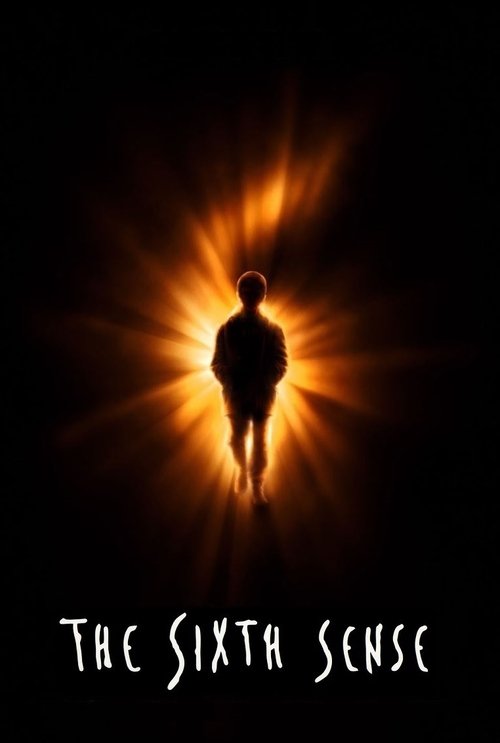
The Sixth Sense is the rare movie where the twist didn’t just surprise audiences, it became a permanent part of the cultural vocabulary. M. Night Shyamalan was 28 years old when he wrote and directed it, and the confidence on display is almost absurd. Bruce Willis gives one of his quietest, most restrained performances as Malcolm Crowe, but the movie belongs to Haley Joel Osment. That kid was eleven. Watch the dinner scene with his mother where he tells her about the grandmother’s answer to the question asked at the grave. That’s not child-actor good. That’s just good, period.
The film became the second-highest-grossing movie of 1999 (behind Star Wars: Episode I - The Phantom Menace, which we need to talk about). The Phantom Menace is the most polarizing entry in this whole year. George Lucas returned to the franchise that defined a generation, and what he delivered was, well, complicated. The pod-racing sequence is legitimately thrilling. John Williams’ “Duel of the Fates” is one of the best pieces of film scoring ever written. The lightsaber fight with Darth Maul still holds up. But Jar Jar Binks, the wooden dialogue, and the midichlorians tested the patience of even the most devoted fans. It proved that hype and quality don’t always travel together. Still, the sheer cultural event of its release is inseparable from what made 1999 feel so enormous.
The Year Had Range
The best argument for 1999 as the greatest year in movies isn’t just the prestige dramas and sci-fi spectacles. It’s the sheer range. The Green Mile gave Frank Darabont another Stephen King adaptation to rival The Shawshank Redemption. At three hours and nine minutes, it has no business holding your attention the way it does, but Michael Clarke Duncan’s performance as John Coffey is so gentle and heartbreaking that you forget you’re watching a movie about death row. Tom Hanks anchors the film with the kind of quiet decency he does better than anyone, and the final act hits like a freight train.
On the completely opposite end of the spectrum, Office Space turned Mike Judge’s observations about cubicle life into a comedy that only gets funnier with time. “I believe you have my stapler” isn’t just a quote. For anyone who’s worked in a soul-crushing corporate environment, it’s therapy. The film barely made money in theaters, but like Fight Club, it found its real audience on home video and became a generational touchstone.
And then there’s 10 Things I Hate About You, which took Shakespeare’s The Taming of the Shrew and dropped it into a late-‘90s high school. Heath Ledger singing “Can’t Take My Eyes Off You” on the bleachers is the moment a movie star was born. Julia Stiles matched him scene for scene, and Joseph Gordon-Levitt showed early flashes of the talent that would define his career. It’s a teen comedy that never talks down to its audience, and it holds up better than most “serious” films from the same year.

The Fun Stuff Worked Too
Not everything in 1999 was trying to upend society. The Mummy was pure adventure filmmaking, the kind of Saturday-matinee fun that Hollywood rarely pulls off without drowning it in self-seriousness. Brendan Fraser’s Rick O’Connell is basically Indiana Jones with better one-liners, and Rachel Weisz’s Evelyn is the rare love interest who’s smarter than everyone else in the room. It’s not deep. It doesn’t need to be.
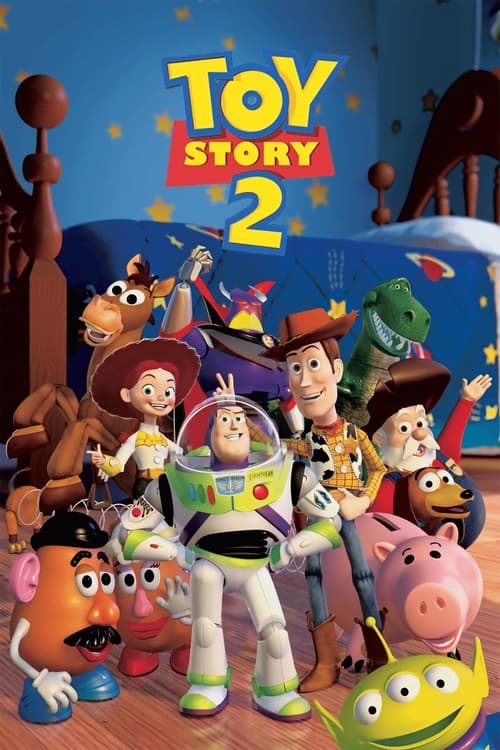
Toy Story 2 also arrived in 1999, and if you want to talk about sequels that outdo the original, this one sits right at the top. The “When She Loved Me” sequence with Jessie is Pixar at its emotional peak, and the film carries a perfect 100% on Rotten Tomatoes to this day. Joan Cusack’s voice work as Jessie brought real weight to what could have been a simple cash-grab sequel. It wasn’t. It was a meditation on what it means to be loved and then forgotten, dressed up in bright colors and toy jokes.
Faith, Romance, and the Rest of the Class
Even Kevin Smith got in on the action with Dogma, a profane, messy, surprisingly sincere movie about faith that features Matt Damon and Ben Affleck as fallen angels trying to sneak back into heaven through a loophole in Catholic doctrine. It shouldn’t work, but the theological arguments buried beneath the crude humor are genuinely interesting. The Catholic League protested it before release, which, honestly, was the best marketing the film could have asked for.
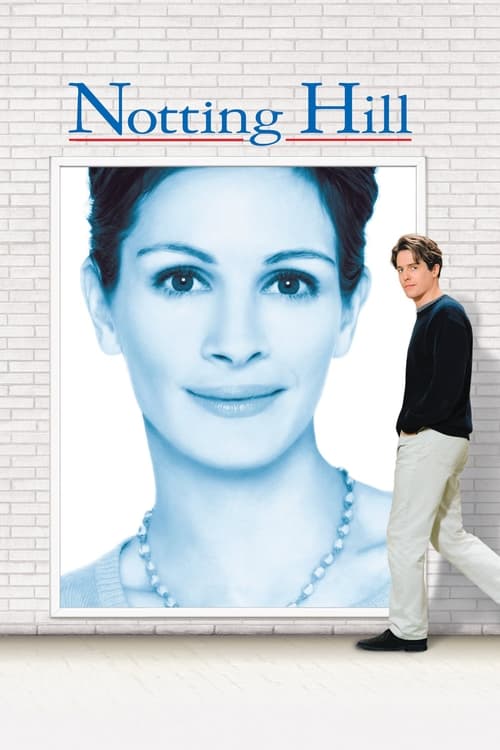
On the romantic comedy front, Notting Hill paired Julia Roberts and Hugh Grant in what became one of the most charming love stories of the decade. Grant plays a bookshop owner who stumbles into a relationship with the world’s biggest movie star, and the film runs on the easy chemistry between its leads and a supporting cast (Rhys Ifans as the perpetually half-dressed roommate Spike) that steals scenes left and right. It’s a fantasy, sure, but a warm and funny one.
Then there was Big Daddy, Adam Sandler’s surprisingly big hit about a slacker who adopts a kid to impress his girlfriend. It’s peak late-‘90s Sandler, broad and silly and occasionally sentimental, but it connected with audiences in a massive way. This was the film that proved Sandler could open a movie to huge numbers even outside his usual SNL crowd. The Sprouse twins were genuinely funny as the kid, and Sandler showed the first signs of the softer screen presence he’d later bring to films like Punch-Drunk Love.
The Films That Don’t Get Talked About Enough
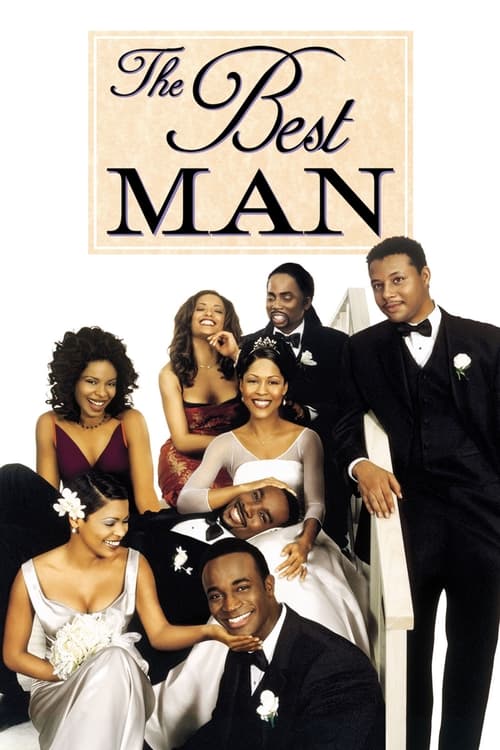
The Best Man doesn’t always get mentioned in these 1999 retrospectives, and that’s a shame. Malcolm D. Lee’s ensemble comedy about a novelist whose tell-all book threatens to blow up his best friend’s wedding weekend is sharp, funny, and carried by a fantastic cast. Taye Diggs, Nia Long, Morris Chestnut, and Terrence Howard all bring real energy, and the film treats its Black characters with a specificity and warmth that mainstream Hollywood comedies rarely bothered with at the time.
Stephen Chow was also making waves with King of Comedy, a Hong Kong film about a struggling actor who can’t land anything beyond extra work. It’s funnier and more heartfelt than you’d expect, blending Chow’s signature physical comedy with a genuinely moving story about artistic persistence. Cecilia Cheung matches his energy beat for beat. Western audiences mostly discovered Chow through Shaolin Soccer and Kung Fu Hustle, but King of Comedy shows he was already operating at a high level. The fact that 1999 produced standout films not just in Hollywood but across the globe only strengthens the case.
The Darker Corners
Not every 1999 film was a crowd-pleaser. 8MM is the year’s grimmest offering, a Nicolas Cage thriller directed by Joel Schumacher about a private investigator hired to determine if a snuff film is real. Critics were brutal to it, and the film is genuinely unpleasant in ways that can be hard to sit through. But Cage commits fully, Joaquin Phoenix turns in a weird, memorable supporting performance, and the movie captures a pre-internet seediness that feels almost quaint now. It’s not good, exactly, but it’s unforgettable in its own nasty way, and it adds another texture to a year that really did cover every corner of the map.
So, Was It Really the Best?
Here’s my honest take: yes. 1999 was the best year in movies. Not because every single film was a masterpiece. The Phantom Menace and 8MM prove that wasn’t the case. But the concentration of original, ambitious, culturally significant films hitting theaters in a single twelve-month window is unmatched. Fight Club, The Matrix, American Beauty, The Sixth Sense, Star Wars: Episode I - The Phantom Menace, The Green Mile, Office Space, Toy Story 2, 10 Things I Hate About You, The Mummy, Notting Hill, Dogma, Big Daddy, The Best Man, King of Comedy, 8MM. That’s sixteen films spanning action, animation, comedy, drama, horror, romance, sci-fi, and thriller. That’s not a year. That’s an entire film school curriculum plus a weekend movie marathon you’d actually want to attend.
The real reason 1999 stands apart is that these movies didn’t play it safe. Studios took swings on weird, dark, personal stories from directors who had something to say. Comedies had teeth. Blockbusters had ideas. Even the popcorn movies respected their audiences. That kind of risk-taking feels increasingly rare. Browse our drama collection or check out our sci-fi picks for more films that carry that same spirit. But if you want to understand what happens when an entire industry is operating at its absolute peak, 1999 is where you start.
Discover Your Next Favorite Film
Browse our curated collection of movie trailers and find something new to watch tonight.
Browse Trailers