10 Movies Like The Substance That Push Body Horror
Films.io Editorial
5 min read

The Substance didn’t just get under your skin. It peeled it off, showed you what was underneath, and dared you to keep watching. Coralie Fargeat’s 2024 body horror movie about a fading celebrity injecting herself with a black-market drug to create a younger double hit a nerve that’s still raw. Demi Moore’s performance is fearless, the practical effects are gloriously disgusting, and that final act goes so far off the rails it circles back to genius. If you’re hunting for movies like The Substance that fuse visceral physical transformation with sharp social commentary, this list is for you. These body horror movies don’t flinch, and they don’t apologize.

What makes The Substance land so hard isn’t just the gore, though there’s plenty. It’s the way Fargeat weaponizes beauty standards, aging anxiety, and self-destruction into something you can’t look away from. The cell-replicating drug doesn’t just give Elisabeth a younger body. It literalizes the idea that women are expected to consume themselves to stay desirable. That’s the thread connecting every pick below: bodies that betray, transform, or revolt, all in service of something bigger than shock value. Some of these are brand-new 2026 releases. Others are stone-cold classics that paved the road Fargeat walked down.
The Film That Started It All
You can’t talk about body horror without talking about David Cronenberg. The Fly (1986) is the genre’s emotional ground zero, the film that proved a man slowly turning into an insect could make you cry. Jeff Goldblum’s Seth Brundle doesn’t just lose his humanity in stages. He loses his teeth, his fingernails, his ability to eat solid food. Cronenberg makes you watch every step of the decay, and Goldblum plays it with such desperate intelligence that you feel every loss. The Substance borrowed heavily from this playbook: the mirror as a horror prop, the body rebelling against its owner’s wishes, the person inside watching it happen. If you’ve somehow never seen The Fly, fix that tonight.

Cronenberg basically invented the modern body horror lexicon. His 1983 film Videodrome, about a cable-TV programmer who develops a vaginal opening in his abdomen after watching a mysterious broadcast signal, is arguably the genre’s philosophical peak. And his son Brandon carried the torch with 2020’s Possessor, about a corporate assassin who hijacks other people’s bodies to carry out hits. Neither of those is in our library yet, but if you’re serious about body horror, seek them out. Fargeat clearly studied Cronenberg’s thesis that we become what we consume, and The Substance’s obsession with screens, cameras, and the male gaze bears his fingerprints all over it.
New Blood: 2026’s Best Body Horror
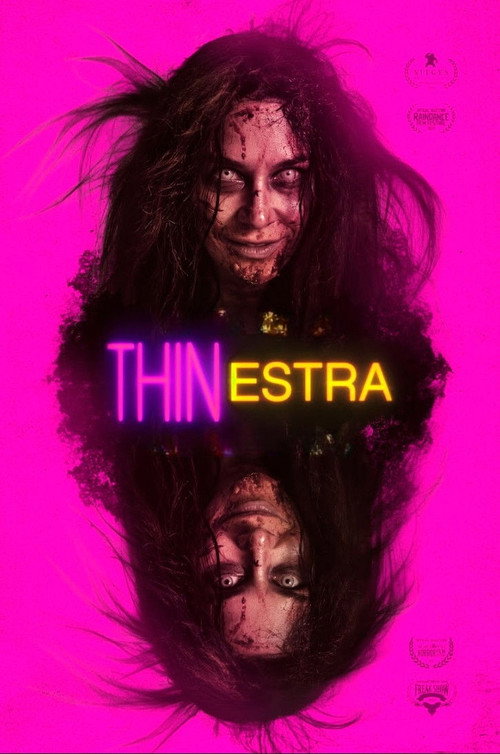
Thinestra (2026)
The most obvious companion piece to The Substance released just last month. A young woman takes a weight-loss pill and the fat she sheds literally comes back as a murderous doppelgänger. The premise is almost too on-the-nose, but that’s the point. Where Fargeat targets aging and celebrity, Thinestra goes after diet culture with the same kind of bloody, unsubtle fury. It’s scrappy and low-budget, but the doppelgänger concept creates the same queasy “fighting yourself” dynamic that made The Substance’s third act so memorable.
Touch Me (2026)
Addison Heimann’s film takes body horror in a different direction entirely. Two codependent best friends become addicted to the heroin-like touch of an alien narcissist who may or may not be plotting world domination. The horror here is about dependency made physical, about what happens when another being’s contact rewires your body’s need center. Where The Substance shows a woman giving up bodily autonomy for youth, Touch Me shows characters surrendering it for connection. The alien-flesh-contact scenes are genuinely unsettling because they look pleasurable right up until they don’t. Olivia Taylor Dudley and Lou Taylor Pucci sell the addiction spiral completely. That 86% on Rotten Tomatoes tells you this one connects.

Frankie, Maniac Woman (2026)
Here’s one that takes the feminist body horror angle and filters it through the LA music industry. Aspiring singer-songwriter Frankie Ramirez has spent her life absorbing childhood trauma, internalized misogyny, and fat-shaming from an image-obsessed business. When she finally snaps, things get bloody. Pierre Tsigaridis directs with raw, ragged energy. If The Substance is about a woman destroying herself to meet impossible standards, Frankie is about a woman who decides to destroy everything else instead. The rage is the point, and it’s contagious.
Lee Cronin’s The Mummy (2026)
Lee Cronin proved he could handle gruesome practical effects with Evil Dead Rise, and his take on The Mummy leans into body horror in ways the Brendan Fraser version never dreamed of. A journalist’s daughter, played by Natalie Grace, vanishes into the desert without a trace. Eight years later she comes back, and what should be a joyful reunion turns into something else entirely. Jack Reynor and Laia Costa anchor a story about a family trying to love someone whose body may no longer be entirely theirs. The film’s franchise obligations sometimes get in the way (the Metacritic 48 isn’t unearned), but when it commits to the wrongness of this returned girl, the body horror lands hard.

We Bury the Dead (2026)
After a catastrophic military disaster, the dead rise, and the government insists they’re harmless and slow-moving. They’re not. Zak Hilditch’s film uses the zombie framework to explore grief and bodily decay in ways that feel more personal than your typical undead movie. Daisy Ridley plays Ava, a woman entering a quarantine zone, and she carries real weight in a role that demands physical and emotional vulnerability. The body horror comes from the gap between what these returned bodies used to be and what they are now. It’s not about jump scares. It’s about looking at someone you loved and seeing something fundamentally wrong behind their eyes. The 88% on Rotten Tomatoes is well-deserved.

28 Years Later: The Bone Temple (2026)
Nia DaCosta’s entry in the 28 Days Later franchise leans harder into body horror than either of its predecessors. The Rage virus has always been about the body turning against the mind, but The Bone Temple explores what happens when the line between infected and uninfected starts to blur. Ralph Fiennes anchors a story where the physical transformation isn’t just a threat from outside. It’s something growing inside the characters, something that rewrites who they are at a cellular level. The film’s interest in mutation and bodily compromise puts it squarely in The Substance’s territory: what does it mean when the body you’re living in stops being yours?
Bodycam (2026)
Brandon Christensen’s film earns its body horror credentials through sheer intensity. After two officers make a catastrophic mistake in a suburban home, shooting a man and his infant child, the aftermath spirals into something supernatural and physically nightmarish. The horror isn’t just psychological. Bodies don’t behave the way they should. The found-footage framing through the bodycam forces you into a claustrophobic, visceral perspective where every physical detail registers. At a lean 75 minutes, it doesn’t waste a second. The 88% on Rotten Tomatoes reflects how effective Christensen is at turning the body into a site of unrelenting dread.
The Genre Keeps Evolving
Julia Ducournau’s Titane (2021) and Raw (2016) are two of the most important body horror films of the past decade, both dealing with female appetite and physical transformation in ways that clearly influenced Fargeat’s approach to The Substance. Titane, which won the Palme d’Or, follows a woman whose body hardens and leaks motor oil as she transforms into something post-human. Raw tracks a vegetarian veterinary student who develops an escalating craving for human flesh after a hazing ritual. Neither is in our movie library yet, but both are essential viewing if you want to trace the lineage that leads directly to The Substance.
Brandon Cronenberg’s Possessor (2020) is another film in that conversation, proving the body horror gene runs in the family. His father David pioneered the genre; Brandon updated it with a film about a corporate assassin who loses track of which body is hers. The identity erosion echoes The Substance’s obsession with the reflection as a site of horror.
One More to Watch For
Natalie Erika James, who directed the excellent Relic, has Saccharine arriving on May 22nd. James has already shown she understands how to use the body as a vehicle for deeper fears, and if Saccharine follows in the tradition of her debut, it could be another strong entry in this wave of body horror. Keep an eye on it.
Body horror works best when it’s about more than just viscera. The Substance understood that your body is the most personal thing you own, and watching it change against your will is the most intimate kind of terror. Every film on this list gets that, whether it’s through doppelgängers, parasites, alien touch, or a slow transformation into something unrecognizable. The genre keeps evolving because the anxieties fueling it, about aging, control, identity, appetite, never go away. Browse more horror films in our collection, and maybe eat dinner first.
Discover Your Next Favorite Film
Browse our curated collection of movie trailers and find something new to watch tonight.
Browse Trailers